
Official government website affiliated with the government of the Kingdom of Saudi Arabia


Official Saudi government website links end with gov.sa
All official educational website links in the Kingdom of Saudi Arabia end with sch.sa or edu.sa

Government websites use HTTPS protocol for encryption and security.
Secure websites in the Kingdom of Saudi Arabia use HTTPS protocol for encryption.



SDG 17.2.2 Initiating and participating in cross-sectoral dialogue about the SDGs
 Posted in 2024-10-28
Updated 30/10/2025
17.2.2Majmaah University – Cross-Sectoral SDG Dialogue and PartnershipsIntroduction
Majmaah University has embraced the UN Sustainable Development Goals (SDGs) as a core element of its mission, actively engaging in dialogue and partnerships across government, industry, and civil society. Aligned with Saudi Arabia’s Vision 2030 and the 2030 Agenda, the university serves as a hub for cross-sectoral dialogue on sustainability. Through conferences, forums, and formal collaborations, Majmaah University brings together academic leaders, policymakers, NGOs, and international organizations to share knowledge and co-create solutions for sustainable development. These efforts – ranging from high-level global summits to local training workshops – demonstrate a comprehensive commitment to advancing SDG targets both on campus and in the broader community.
Participation in SDG-Focused Conferences and Dialogues
Majmaah University actively participates in national and international SDG forums, often alongside government bodies, NGOs, and UN agencies. Key examples include:
-
United Nations HLPF Side Events:
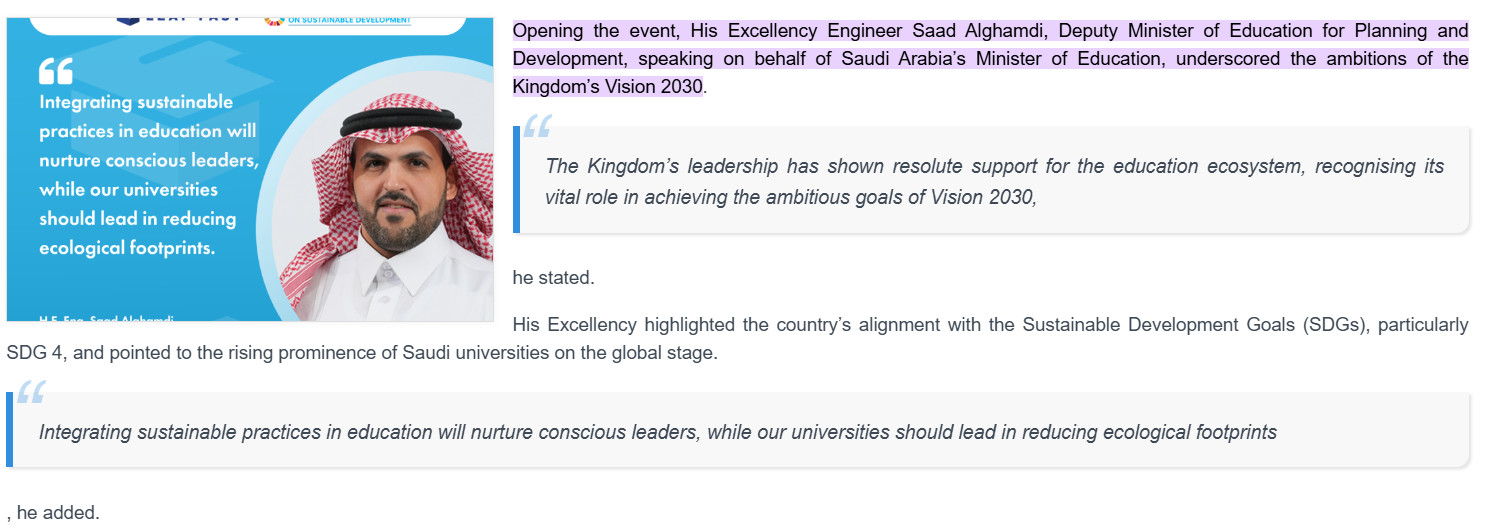
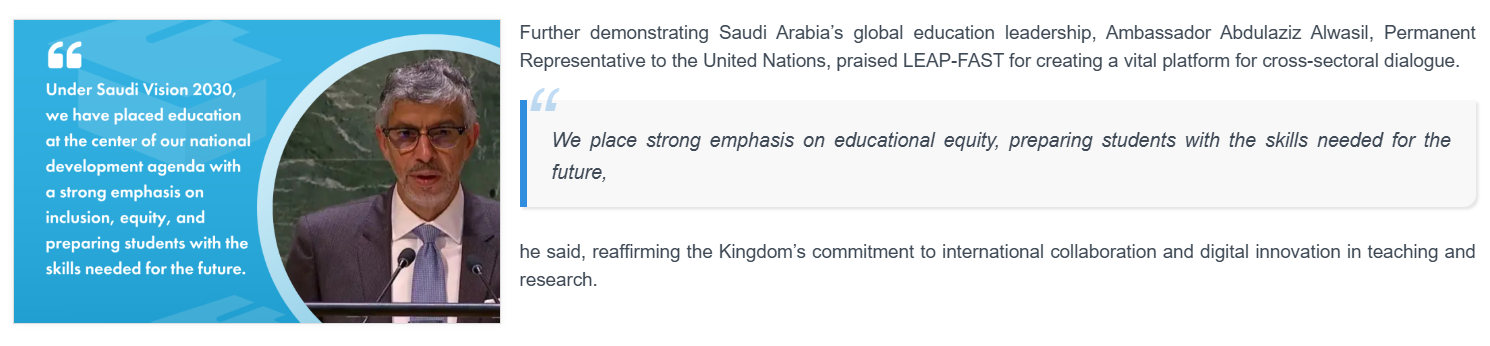
The university, through its CIFAL Saudi Centre, has taken part in official side events at the UN High-Level Political Forum. In 2024, Majmaah’s delegation joined a UN side event themed “Higher Education Institutions as Vital Partners in Designing and Delivering Sustainable, Resilient and Innovative Solutions”, where Saudi Arabia’s UN Ambassador and global university presidents discussed how higher education can drive the SDGs via interdisciplinary learning and community-oriented action mu.edu.sa. Likewise, at the 2025 HLPF, Majmaah University co-organized a side event with UNITAR and UNESCO, reaffirming higher education’s role in solving global challenges. Saudi Deputy Minister of Education Eng. Saad Alghamdi opened the event by underscoring the Kingdom’s Vision 2030 and alignment with the SDGs unitar.orgunitar.org. Notably, Saudi’s UN Ambassador praised the LEAP-FAST initiative (where Majmaah is a key partner) as “a vital platform for cross-sectoral dialogue,” emphasizing the importance of international collaboration in education and innovation.
SAUDI CIFAL CENTER PARTICIPATES IN A UN SIDE EVENT
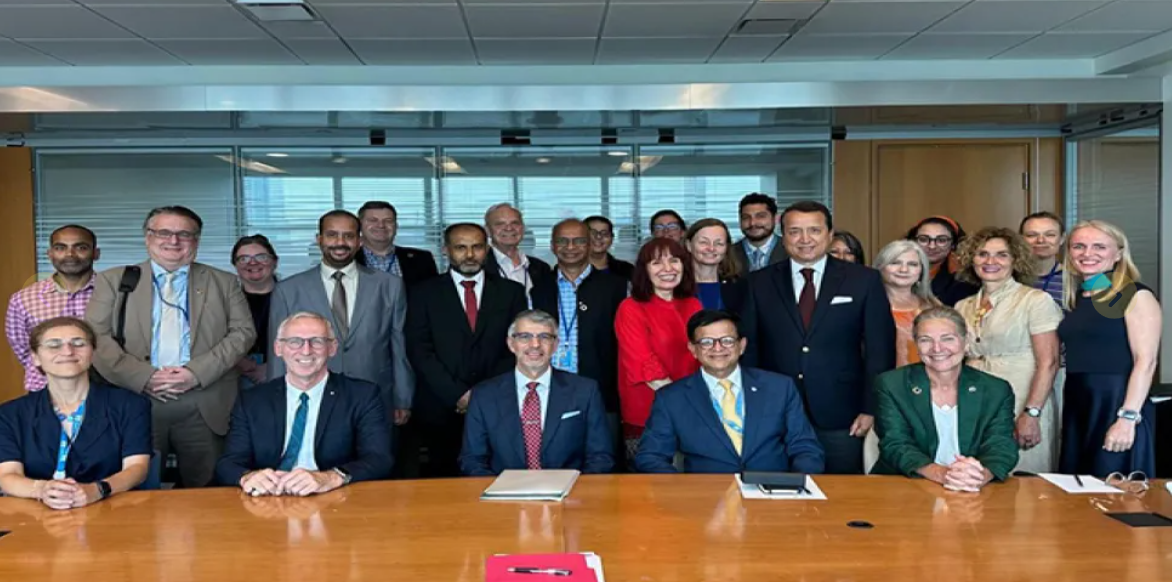
The Saudi Center CIFAL participated in the official side event organized by the United Nations Institute for Training and Research (UNITAR) and UNESCO, which was held at the High-Level Political Forum (HLPF) under the theme: Higher Education Institutions as Vital Partners in Designing and Delivering Sustainable, Resilient and Innovative Solutions".
The Permanent Representative of Saudi Arabia to the United Nations, Ambassador Dr. Abdulaziz Al-Wasil, attended the event which discussed how higher education institutions can play a pivotal role in achieving the Sustainable Development Goals (SDGs) through interdisciplinary learning, knowledge-based and community-oriented actions, and integrating sustainability as a core objective of education and research.
Education leaders from over 10 countries to discuss ways forward in making future policies for higher education institutions. Among the attendees were the Executive Director of the United Nations Institute for Training and Research - Assistant Secretary-General of the United Nations - Nikhil Seth, in addition to a group of presidents of international universities such as: Victoria University, Newcastle University, and high-level representatives from United Nations organizations and the governments of Ireland, Finland, and Croatia.
MU was represented in this event by the Vice-Rector for Graduate Studies and Scientific Research, Prof. Muhammad Al-Shehri, and the Director of the Saudi Cifal Center, Dr. Ayman Al-Barakati, who pointed out that the support of MU's rector and the Chairman of Cifal Council has played a role in allowing the center to participate in such events.
LEAP-FAST side event at 2025 HLPF “Innovating across higher education space for more inclusive and sustainable future for all”
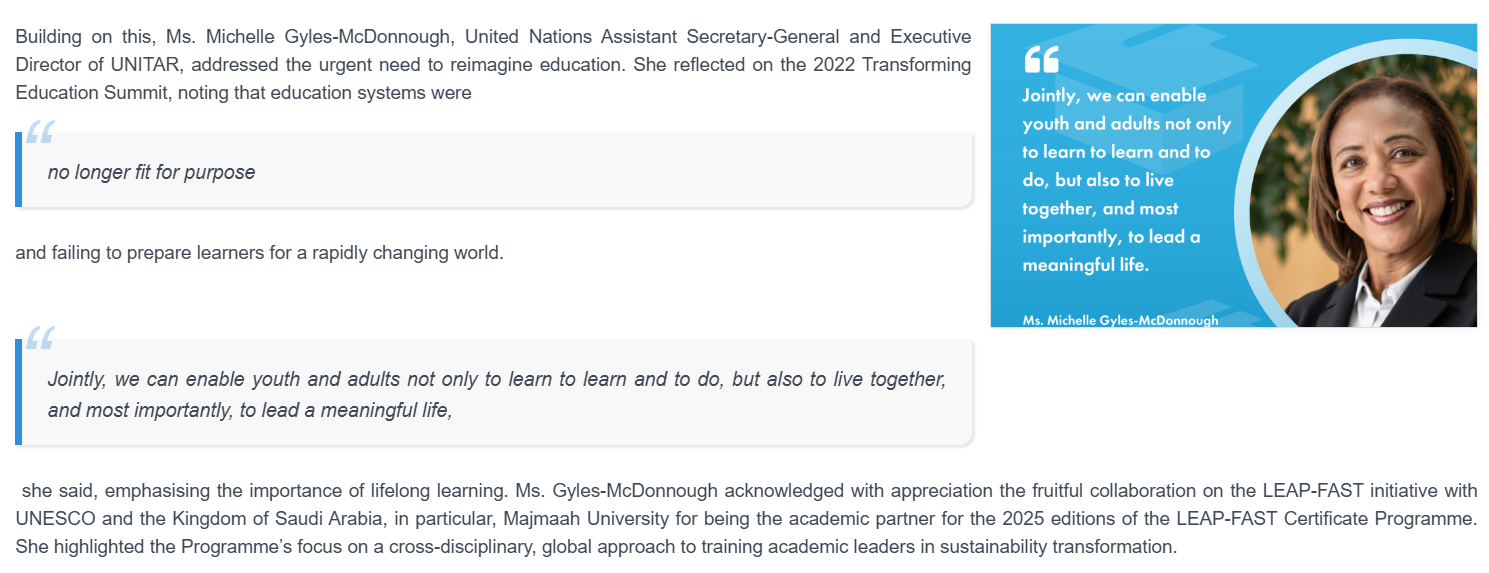
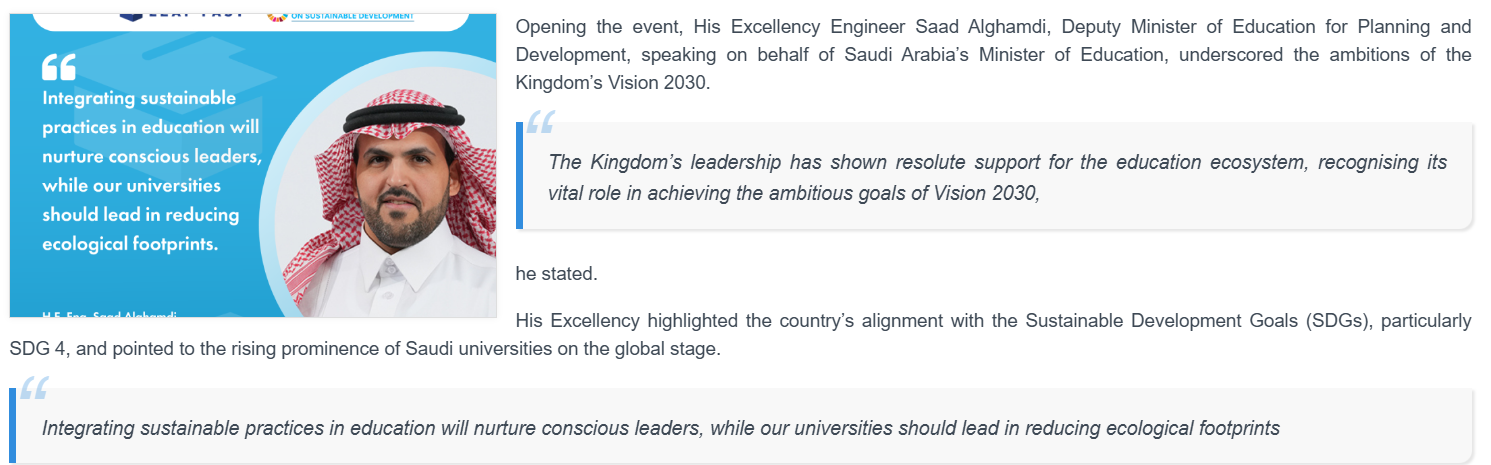
28 July 2025, Geneva, Switzerland - Global leaders in higher education and sustainable development convened during a dynamic side event at the 2025 High-Level Political Forum on Sustainable Development to reaffirm higher education’s vital role in addressing the challenges of our century. Organized by UNITAR, UNESCO, and Majmaah University and CIFAL Saudi Arabia, the side event “Innovating across higher education space for more inclusive and sustainable future for all” spotlighted the momentum behind the Leaders in Higher Education Alliance Programme – For Accelerating Sustainability Transformations (LEAP-FAST), which is a global initiative uniting higher education institutions in fostering inclusive, transformative, and sustainable innovation.
-
Higher Education Sustainability Initiative (HESI) Forum:
Majmaah University was a speaker at the 2024 HESI Global Forum, a special event during the HLPF focused on “The Future of Higher Education for Sustainable Development.” The session – attended by high-level representatives from the UN and multiple governments – spotlighted emerging issues like AI’s impact on sustainable development mu.edu.sa mu.edu.sa. Representing Majmaah, Vice-Rector Prof. Mohammed Al-Shehri highlighted how education, innovation, and sustainability intersect. This forum served as a springboard for future initiatives to be launched at the 2024 UN Summit of the Future, with its recommendations feeding into policy proposals for sustainability in higher education mu.edu.sa.
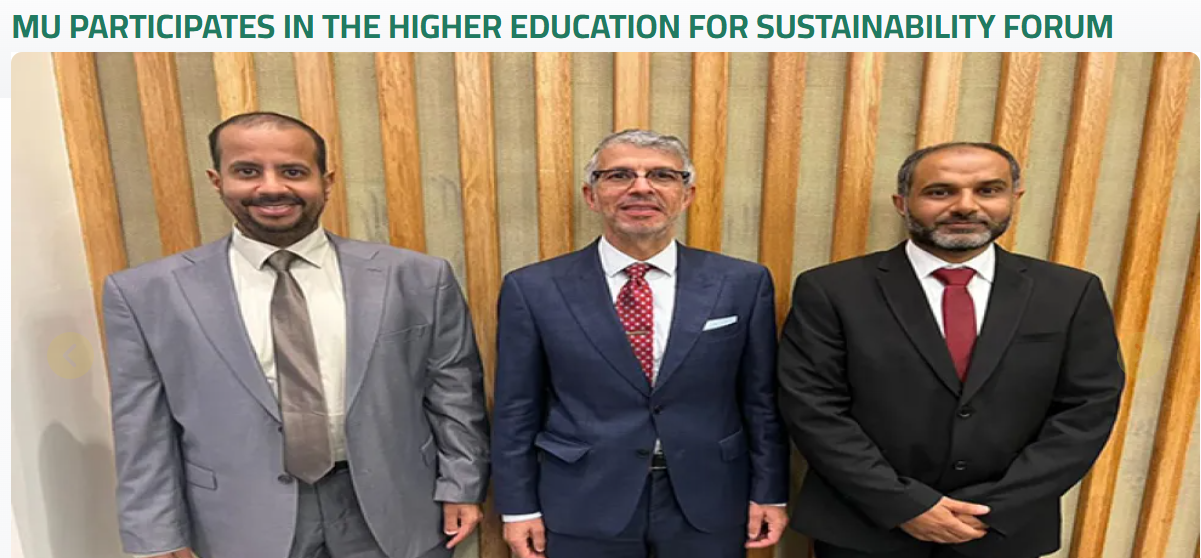
MU PARTICIPATES IN THE HIGHER EDUCATION FOR SUSTAINABILITY FORUM
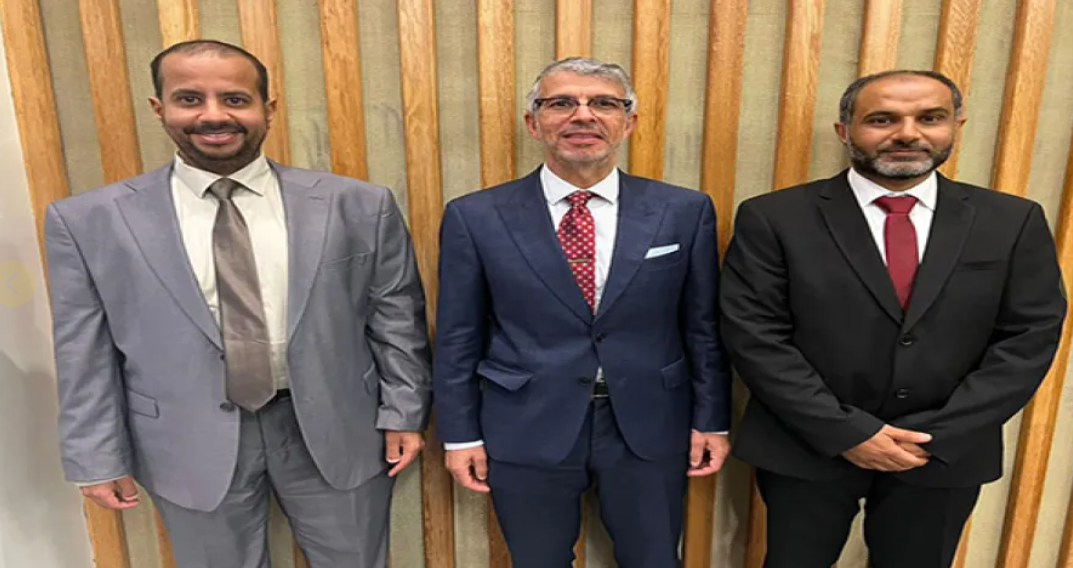
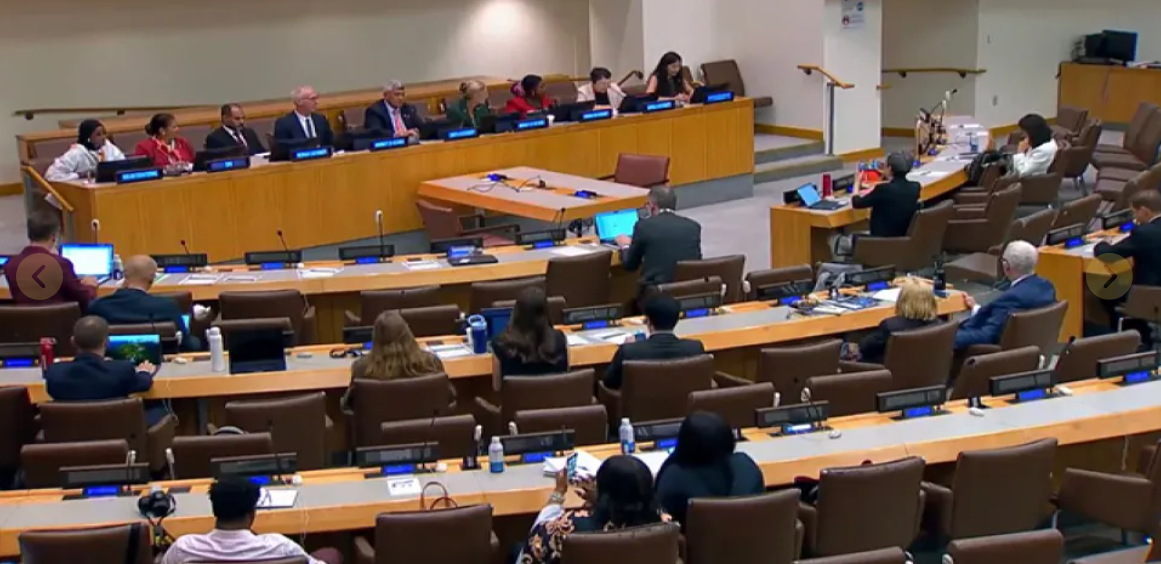
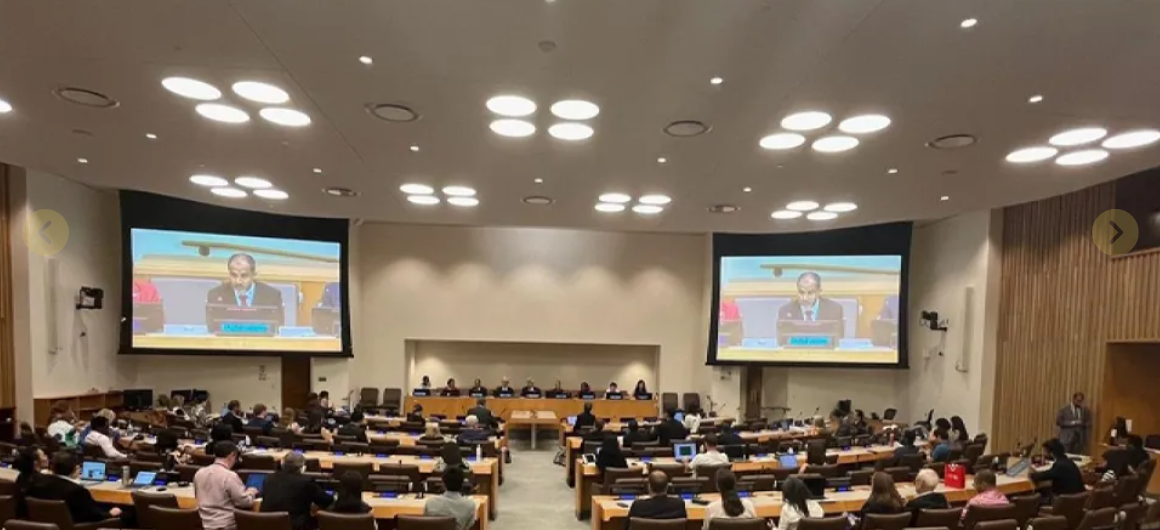
At the request of MU Rector and the Chairman of the Board of Directors of the Saudi Cifal Center, Prof. Saleh Al-Mezal - MU participated in the Higher Education for Sustainability Forum (HESI) 2024, which was held as a special event under the High-Level Political Forum (HLPF). The event aims to follow up and review the 2030 Agenda for Sustainable Development.
The event was attended by His Excellency the Permanent Representative of the Kingdom to the United Nations, Ambassador Dr. Abdulaziz Al-Wasil, and high-level representatives from international organizations and governments. Prof. Mohammed Al-Shehri, the Vice-Rector for Graduate Studies and Scientific Research, represented MU as a speaker in this event.
The event focused on "The Future of Higher Education for Sustainable Development" and addressed the intersection between education, innovation, and sustainability, with a focus on the impact of artificial intelligence and other emerging technologies amid the challenges facing the progress of achieving the Sustainable Development Goals (SDGs).
The event acted as a preparatory platform for future initiatives to be promoted or launched at the Future Summit 2024. The recommendations and strategies resulted from the forum will contribute to drafting policies and practices supporting action plans for sustainable development in higher education.
The forum asserts the vital role of transforming higher education institutions to keep pace with dynamic global changes and an unpredictable future, valuing local knowledge and partnerships, promoting sustainable and equitable development around the world.
All the areas that higher education institutions can possibly contribute to achieving their Sustainable Development Goals using emerging technologies were mentioned, including artificial intelligence.
-
National and Regional Conferences:
Within Saudi Arabia, Majmaah University ensures its presence in major dialogues led by government and industry. For instance, the university’s leadership participated in the International Conference and Exhibition for Education organized by the Ministry of Education, which convened public and private sector stakeholders to address post-pandemic educational resilience and the sustainability of education systems mu.edu.sa mu.edu.sa. The University President noted this conference’s strategic focus – from expanding digital infrastructure to forging collaborations between the ministry, tech companies, and telecom providers – all aimed at enhancing education in line with Vision 2030 mu.edu.sa mu.edu.sa. By engaging in such policy-driven forums, Majmaah University contributes academic expertise to national SDG discussions on quality education (SDG 4) and innovation (SDG 9).
University President: The International Education Conference is an opportunity to exchange expertise and experiences that reflect the desire for development and global competitiveness, and to enhance opportunities for local and international participation in providing education and investing in it.
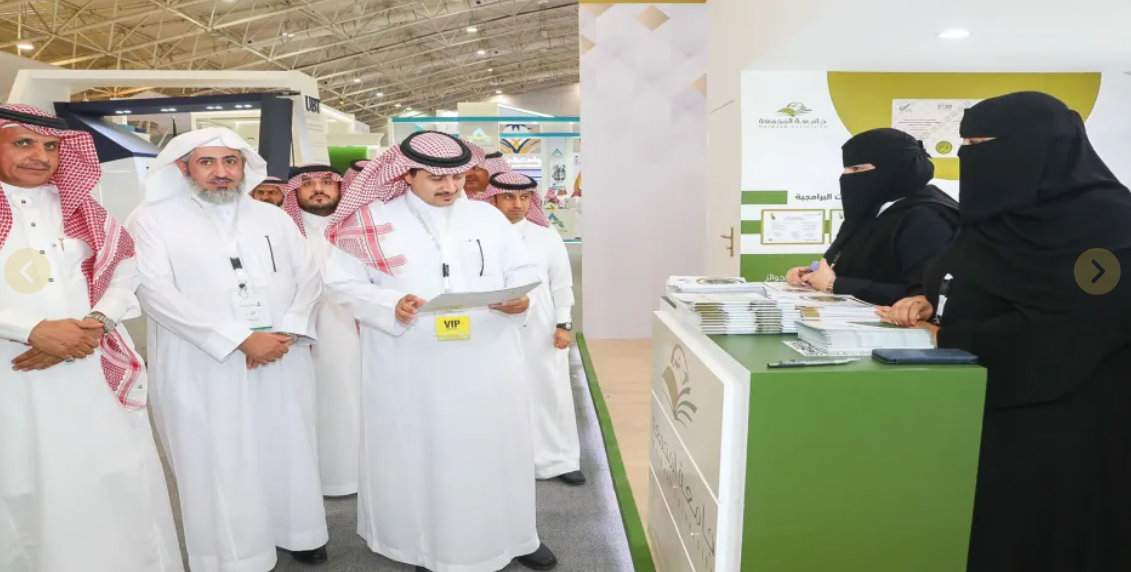
His Excellency the University President, Dr. Saleh bin Abdullah Al-Muzal, stated that the university was keen to participate in the International Education Conference and Exhibition organized by the Ministry of Education, and that the university was well prepared for this participation. Given the great importance of this event and its significant positive impact on the university, the conference's objectives and themes focus on important strategic goals adopted by the Ministry, particularly those related to confronting the challenges of the current Corona pandemic and epidemics that may spread in the future, and how to deal with these epidemics to ensure the sustainability of the educational process. The conference also discusses the requirements for developing the infrastructure for distance education, whether online or through educational channels, in addition to coordination and activating cooperation between the relevant parties, including the Ministry of Education and its sectors, educational software companies, computer technology companies, and telecommunications companies. The conference addresses ways to develop the distance learning capabilities of the teaching staff, the necessity of adapting and acclimatizing to emerging circumstances and crises, contributing to strengthening the Kingdom's Vision 2030, affirming its role as an effective force in civilization, science, and human progress, reviewing the available opportunities to develop education in the Kingdom and invest in its capabilities, exchanging experiences and experiments that reflect the desire for development and global competitiveness, enhancing opportunities for local and international participation in providing education and investing in it, identifying incentives for investment in education and attracting local and global opportunities, in addition to overcoming the challenges facing education in the Kingdom. ...and providing solutions that contribute to raising the level of its outputs and the efficiency of its institutions in accordance with international standards and indicators for measurement and evaluation.
Hosting SDG Dialogues and Events at Majmaah University
Majmaah University not only participates in others’ events but has hosted high-profile dialogues on sustainable development – physically and virtually – demonstrating leadership in convening cross-sector partners:
-
“Universities and the Sustainable Development Goals 2030:
Targets and Practices” Conference:
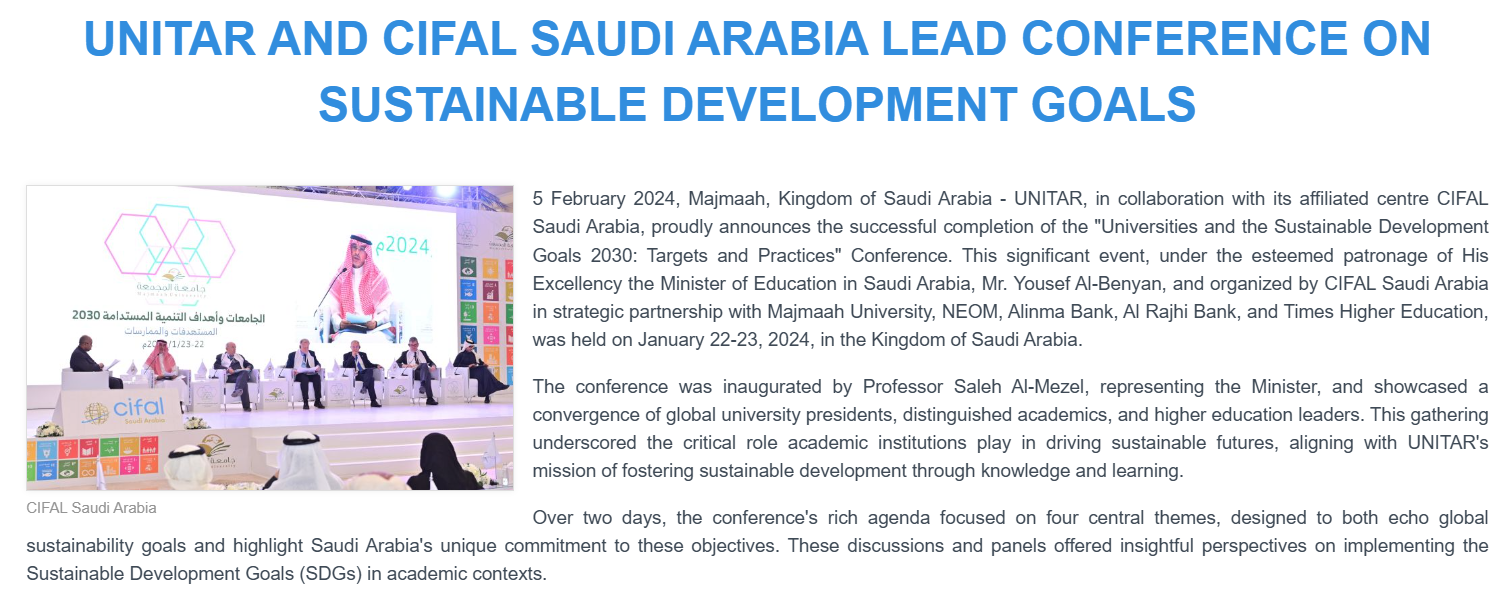
In January 2024, Majmaah University – in collaboration with its affiliated CIFAL Saudi Arabia Centre – hosted a landmark international conference dedicated to the SDGs. Held under the patronage of H.E. Yousef Al-Benyan (Saudi Minister of Education), this two-day event brought together global university presidents, distinguished academics, ambassadors, and industry leaders unitar.org unitar.org. Organized in strategic partnership with public and private entities (including NEOM, Alinma Bank, Al Rajhi Bank, and Times Higher Education), the conference underscored the critical role of academia in driving sustainable futures unitar.org unitar.org. Dynamic panels addressed integrating SDGs into research and curriculum, aligning Saudi Vision 2030 with global goals, and sharing international best practices unitar.org unitar.org. The event’s high-level lineup – featuring Saudi’s UN Ambassador Dr. Abdulaziz Al-Wasil and former UN officials alongside experts like Prof. Allam Ahmed (Queen Mary University of London) and Mr. Duncan Ross (THE) – provided a rich blend of global and local perspectives unitar.org. An accompanying sustainability-themed art exhibition reinforced the cultural dimension of the SDGs unitar.org. In closing, UNITAR’s Alex Mejia (Head of CIFAL Global Network) and Majmaah’s Prof. Musallam Al-Dosari issued a call for collective responsibility and ongoing collaboration to realize the SDGs, setting the stage for future joint initiatives unitar.org. This conference, described as a “high-level platform for exchanging ideas, sharing experiences, and strengthening collaboration toward achieving sustainability goals,” concluded with strategic recommendations to embed sustainability into university structures and bolster cross-sector partnerships for a more sustainable future mu.edu.sa mu.edu.sa.
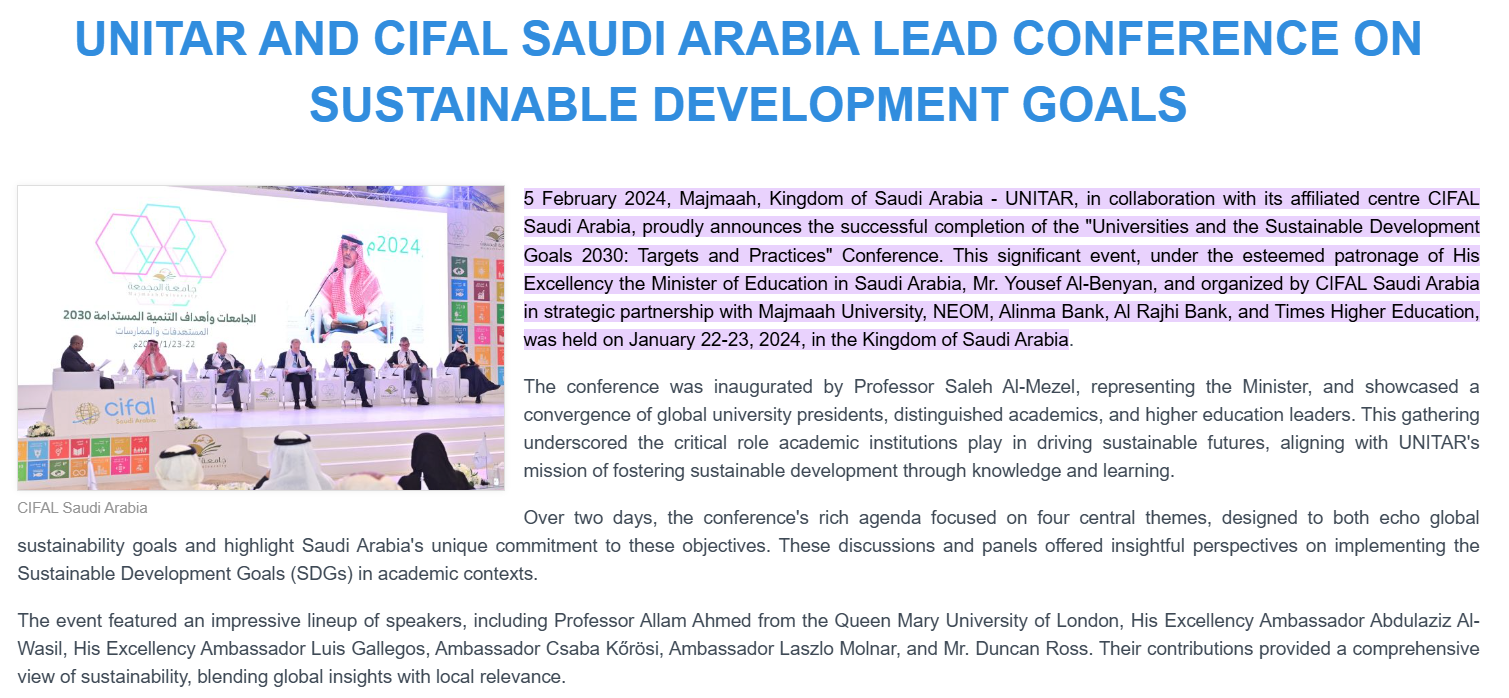
UNITAR and CIFAL Saudi Arabia Lead Conference on Sustainable Development Goals
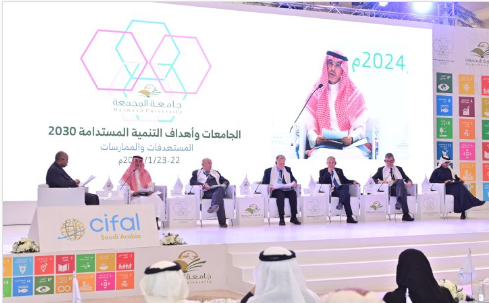
UNITAR and CIFAL Saudi Arabia Lead Conference on Sustainable Development Goals
CIFAL Saudi Arabia
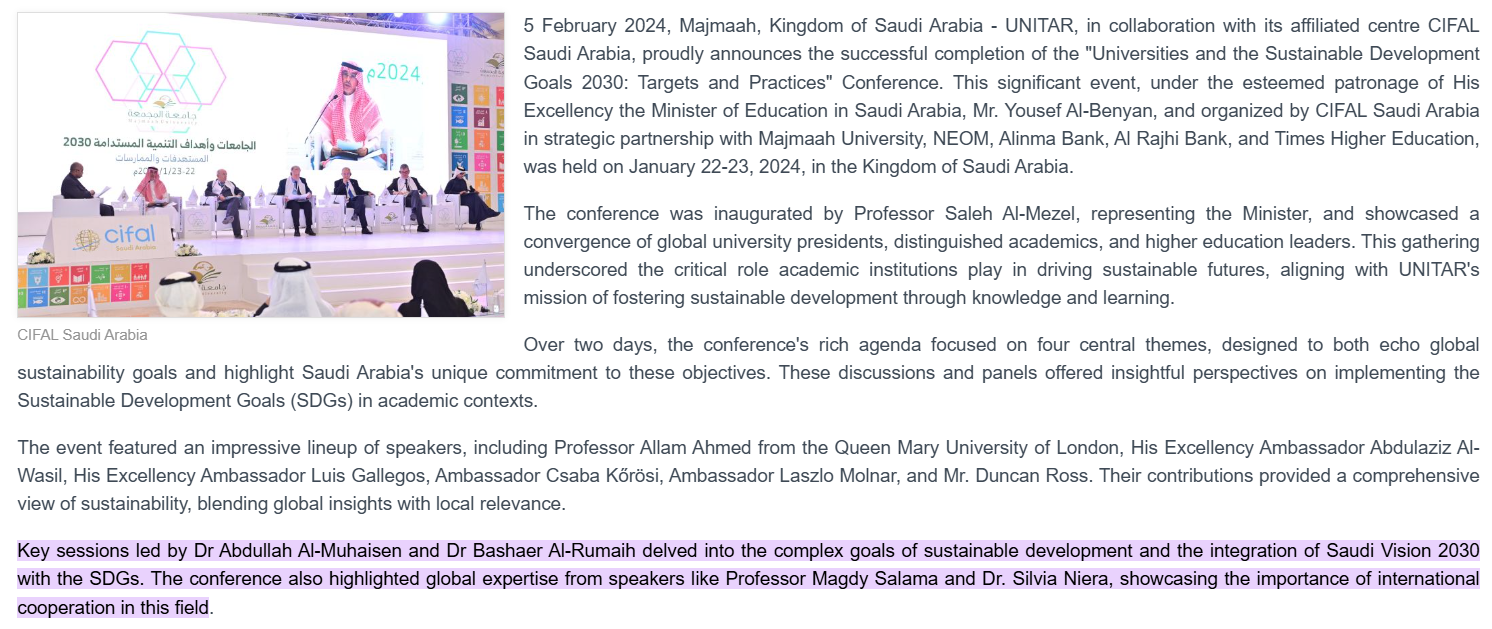
5 February 2024, Majmaah, Kingdom of Saudi Arabia - UNITAR, in collaboration with its affiliated centre CIFAL Saudi Arabia, proudly announces the successful completion of the "Universities and the Sustainable Development Goals 2030: Targets and Practices" Conference. This significant event, under the esteemed patronage of His Excellency the Minister of Education in Saudi Arabia, Mr. Yousef Al-Benyan, and organized by CIFAL Saudi Arabia in strategic partnership with Majmaah University, NEOM, Alinma Bank, Al Rajhi Bank, and Times Higher Education, was held on January 22-23, 2024, in the Kingdom of Saudi Arabia.
The conference was inaugurated by Professor Saleh Al-Mezel, representing the Minister, and showcased a convergence of global university presidents, distinguished academics, and higher education leaders. This gathering underscored the critical role academic institutions play in driving sustainable futures, aligning with UNITAR's mission of fostering sustainable development through knowledge and learning.
Over two days, the conference's rich agenda focused on four central themes, designed to both echo global sustainability goals and highlight Saudi Arabia's unique commitment to these objectives. These discussions and panels offered insightful perspectives on implementing the Sustainable Development Goals (SDGs) in academic contexts.
The event featured an impressive lineup of speakers, including Professor Allam Ahmed from the Queen Mary University of London, His Excellency Ambassador Abdulaziz Al-Wasil, His Excellency Ambassador Luis Gallegos, Ambassador Csaba Kőrösi, Ambassador Laszlo Molnar, and Mr. Duncan Ross. Their contributions provided a comprehensive view of sustainability, blending global insights with local relevance.
Key sessions led by Dr Abdullah Al-Muhaisen and Dr Bashaer Al-Rumaih delved into the complex goals of sustainable development and the integration of Saudi Vision 2030 with the SDGs. The conference also highlighted global expertise from speakers like Professor Magdy Salama and Dr. Silvia Niera, showcasing the importance of international cooperation in this field.
An art exhibition complemented the intellectual discussions, symbolizing the commitment to diverse expressions of sustainability and the role of creativity and innovation in achieving the SDGs.
The conference concluded with an inspiring session by Mr. Alex Mejia, Head of the Global CIFAL Network, emphasizing the collective responsibility in realizing the SDGs. Professor Musallam Al-Dosari’s concluding remarks set the stage for future collaborations, encapsulating the vision of the conference.
This event not only demonstrated Saudi Arabia's leadership in integrating sustainability into education but also highlighted UNITAR and CIFAL Saudi Arabia's commitment to mobilizing academic institutions globally in achieving the Sustainable Development Goals by 2030.
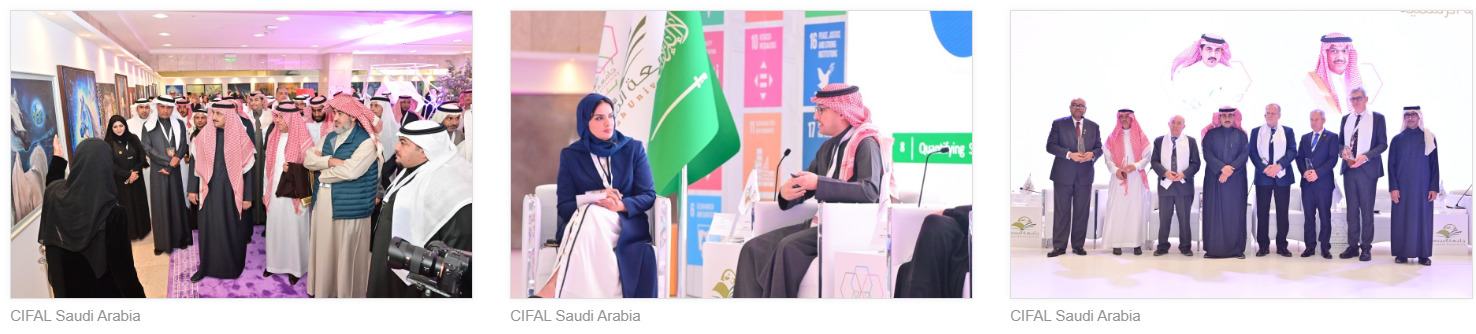
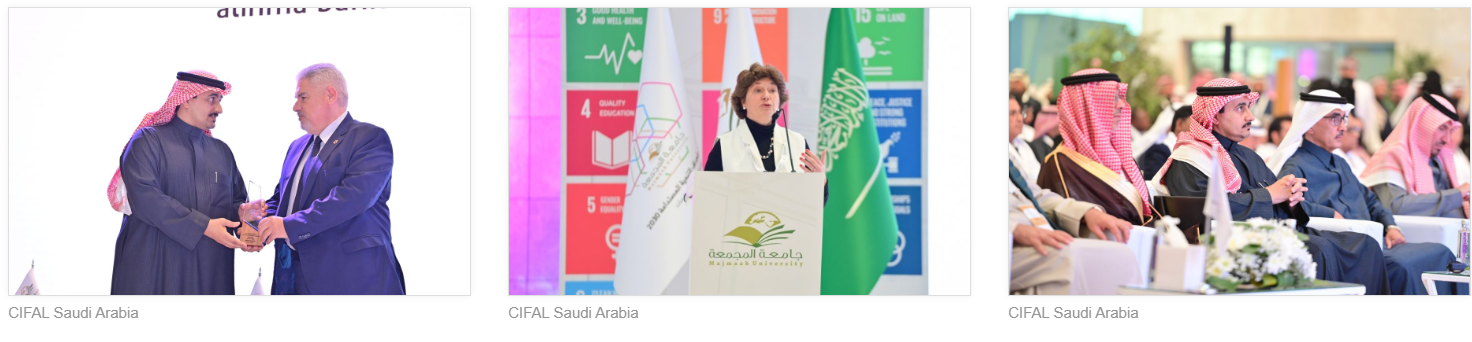
University Conference on Sustainable Development Goals 2030: Targets and Practices

The ""Universities and the Sustainable Development Goals 2030: Targets and Practices"" conference marked a key milestone in affirming Majmaah University and the Saudi CIFAL Center’s commitment to supporting the United Nations’ 2030 Agenda for Sustainable Development. The event brought together a diverse group of academic leaders, practitioners, and both local and international experts. It served as a high-level platform for exchanging ideas, sharing experiences, and strengthening collaboration toward achieving sustainability goals. The conference opened with a strong institutional and intellectual call to action—urging higher education institutions to unify efforts in advancing the sustainability agenda. It highlighted the critical role universities play in developing sustainable solutions and integrating the SDGs into education, research, and community initiatives. The program featured dynamic panel discussions, specialized workshops, and thoughtful deliberations on key challenges and opportunities. It concluded with a set of strategic recommendations focused on embedding sustainability into university structures and strengthening cross-sector partnerships for a more sustainable future.
-
CIFAL Training Programs and Forums:
As the host institution of CIFAL Saudi Arabia (a UNITAR-affiliated training center), Majmaah University regularly delivers multi-stakeholder programs on the SDGs. In 2025, the university’s Saudi Center for Sustainability and Development (CIFAL) launched an advanced training program titled “Expert in Applying the Sustainable Development Goals (SDGs 2030),” under the patronage of Vice-Rector Prof. Musallam Al-Dosari m.mu.edu.sa. This program brought together a distinguished group of participants from various universities, government entities, and development sectors, reflecting a truly cross-sector learning environment m.mu.edu.sa. Over its course, attendees deepened their understanding of SDG concepts and practical tools, learning to design impactful development initiatives aligned with Vision 2030 m.mu.edu.sa. Specialized seminars and workshops have also been hosted on campus through CIFAL – for example, on empowering women in sustainable development, promoting environmental awareness, and integrating sustainability in education – all open to the wider public and stakeholders. Such events hosted at Majmaah University (including an annual “International Sustainability Forum”) serve as inclusive dialogue platforms where academia meets practitioners to address local and global sustainability challenges.
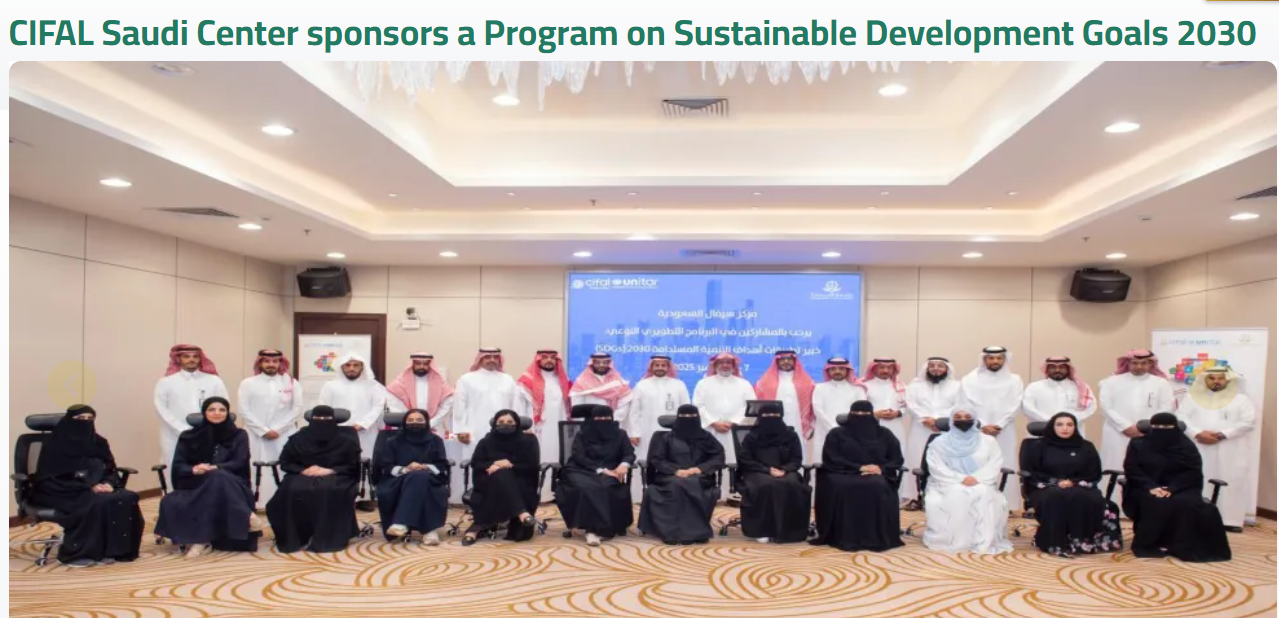
CIFAL Saudi Center sponsors a Program on Sustainable Development Goals 2030
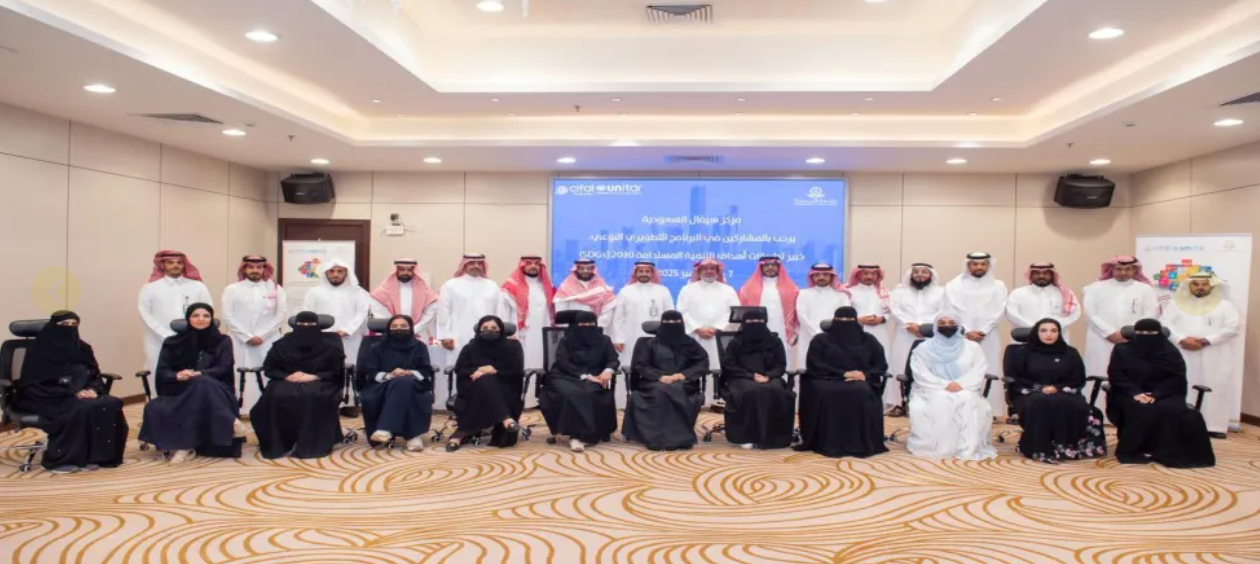
Under the generous patronage of Prof. Musallam Al-Dosari, Vice Rector of Majmaah University for Development and Investment, the Saudi Center for Sustainability and Development (CIFAL) in Riyadh concluded its advanced training program: “Expert in Applying the Sustainable Development Goals (SDGs 2030).” The program brought together a distinguished group of leaders and academics from various universities, government entities, and development sectors.
This new edition of the program was designed to empower participants with a deep understanding of SDG concepts and practical applications, equipping them with the skills to design and implement impactful development initiatives that support Saudi Arabia’s Vision 2030 and enhance institutional performance in the development field.
Key themes included:
· Fundamental concepts of development, sustainability, and the SDGs 2030.
· The meaning and impact of SDGs and their alignment with Vision 2030.
· Saudi Arabia’s achievements in advancing the SDGs.
· The role and importance of sustainability reports and methodologies for impact measurement.
· The program also aimed to qualify candidates to join the global initiative LEAP-FAST (Leaders of Higher Education for Accelerating Transformations in Sustainability) – Second Edition, strengthening their competitiveness both locally and internationally.
Collaboration with Government and NGOs on SDG Initiatives
Majmaah University has established collaborations with governmental agencies, non-governmental organizations (NGOs), and industry partners to advance research, training, and knowledge-sharing for the SDGs. These collaborations ensure that the university’s expertise directly contributes to societal development efforts:
-
UNITAR and United Nations Partnerships:
Through CIFAL Saudi Arabia, Majmaah maintains a formal affiliation with the United Nations Institute for Training and Research. This linkage enabled joint organization of SDG events and capacity-building programs. Majmaah’s CIFAL center participated in a UN HLPF side event co-hosted by UNITAR and UNESCO, joining discussions on how universities can be “vital partners” in delivering resilient and innovative SDG solutions mu.edu.sa mu.edu.sa. The presence of the Saudi UN Ambassador, senior UN officials (e.g. ASG Nikhil Seth of UNITAR) and international academia at these events underscores how Majmaah’s UN collaboration places it at the heart of global SDG dialogue mu.edu.sa. Similarly, Majmaah University’s leaders collaborate with UN initiatives like the Higher Education Sustainability Initiative (HESI) and have partnered with the United Nations Development Programme (UNDP) on innovation programs, ensuring alignment of campus projects with global development priorities mu.edu.sa.
SAUDI CIFAL CENTER PARTICIPATES IN A UN SIDE EVENT
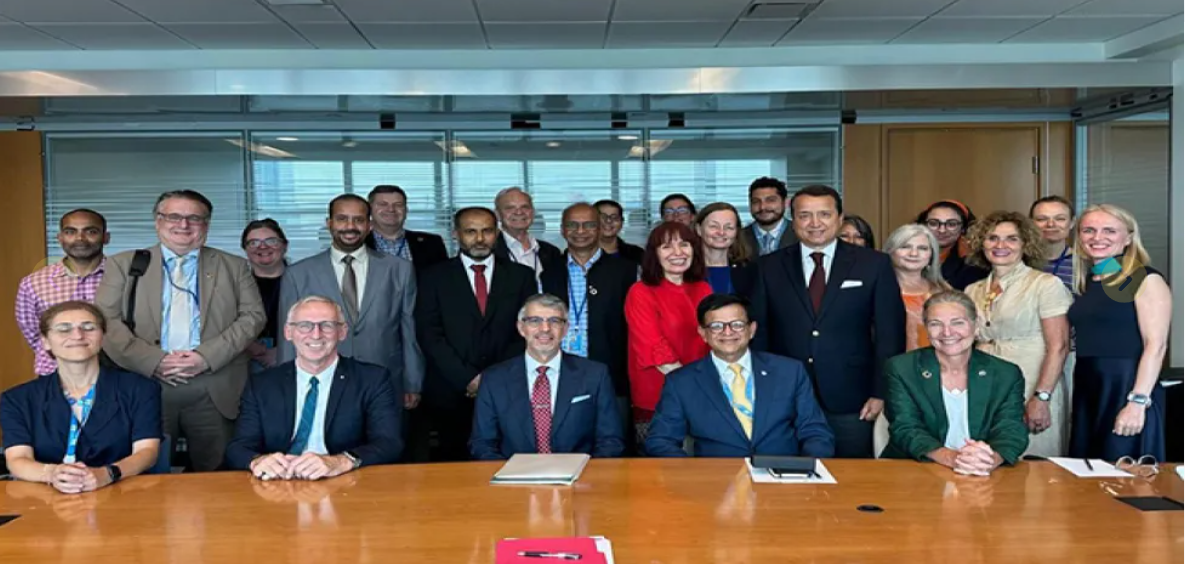
The Saudi Center CIFAL participated in the official side event organized by the United Nations Institute for Training and Research (UNITAR) and UNESCO, which was held at the High-Level Political Forum (HLPF) under the theme: Higher Education Institutions as Vital Partners in Designing and Delivering Sustainable, Resilient and Innovative Solutions".
The Permanent Representative of Saudi Arabia to the United Nations, Ambassador Dr. Abdulaziz Al-Wasil, attended the event which discussed how higher education institutions can play a pivotal role in achieving the Sustainable Development Goals (SDGs) through interdisciplinary learning, knowledge-based and community-oriented actions, and integrating sustainability as a core objective of education and research.
Education leaders from over 10 countries to discuss ways forward in making future policies for higher education institutions. Among the attendees were the Executive Director of the United Nations Institute for Training and Research - Assistant Secretary-General of the United Nations - Nikhil Seth, in addition to a group of presidents of international universities such as: Victoria University, Newcastle University, and high-level representatives from United Nations organizations and the governments of Ireland, Finland, and Croatia.
MU was represented in this event by the Vice-Rector for Graduate Studies and Scientific Research, Prof. Muhammad Al-Shehri, and the Director of the Saudi Cifal Center, Dr. Ayman Al-Barakati, who pointed out that the support of MU's rector and the Chairman of Cifal Council has played a role in allowing the center to participate in such events.
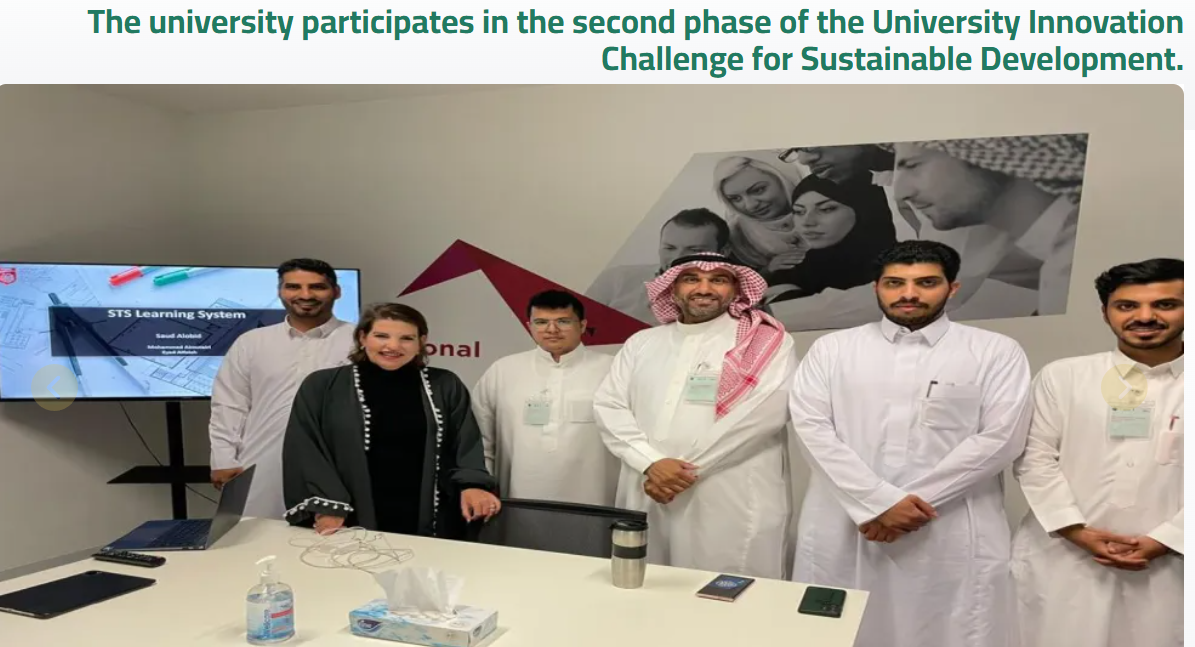
The university participates in the second phase of the University Innovation Challenge for Sustainable Development.
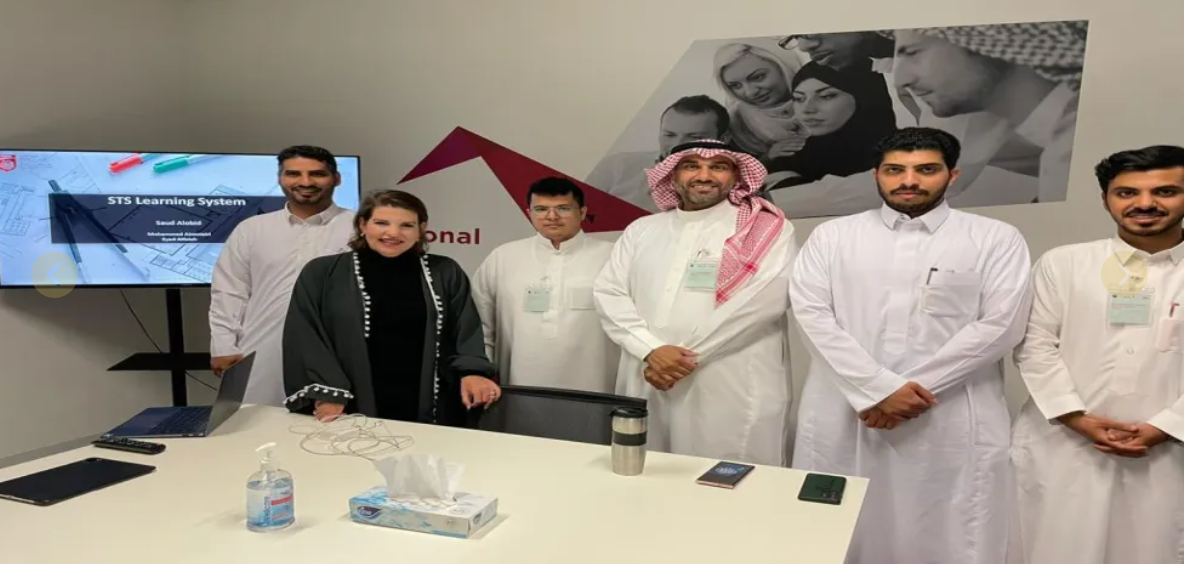
In line with the Kingdom's Vision 2030 to develop the innovation system, and in continuation of its efforts to spread the culture of invention to discover inventors and innovators with the aim of supporting them and developing their pioneering products, the university, represented by the Center for Innovation and Entrepreneurship, participated in the second phase of the University Innovation Challenge for Sustainable Development Program. The university is one of 15 universities across the Kingdom participating in this program, which is organized by the Ministry of Education in partnership with the Prince Mohammed bin Salman College of Business and Entrepreneurship, Babson College of Entrepreneurship Education, and the United Nations Development Program.
The University Innovation Challenge for Sustainable Development Program aims to develop entrepreneurial and innovative capabilities and harness them to find solutions to the challenges facing sustainable development, activate strategic partnerships with local and international entities, and engage innovative students and faculty members in a unique global educational experience that will contribute to the development of emerging university projects.
A team from the College of Engineering represented the university in the second phase of the challenge through the STS Learning System project, in the presence of His Excellency the Head of the Innovation and Entrepreneurship Center, Dr. Abdullah bin Saeed Bajhazer, and under the supervision of His Excellency Dr. Abdulaziz bin Dakhil Al-Mutairi. Students Saud Al-Obaid, Iyad Al-Faleh, and Mohammed Al-Mutairi also participated in the project. The project consists of a learning system that allows students to share knowledge and enable students to help each other on various topics depending on their specialization, saving time and money. It also allows for discussions and conversations among students and the transfer of experiences and knowledge.
The program included several educational experiences covering various topics, presenting successful experiences in innovation and entrepreneurship, and discussing the difficulties and challenges facing leaders and officials in spreading the culture of innovation and entrepreneurship.
Her Excellency the Vice President for Female Student Affairs, Dr. Jawaher bint Abdulrahman Al-Omar, stated that the university continues to emphasize continuous development by developing and preparing innovative students, providing them with the necessary support, striving to create an innovative and sustainable educational environment that stimulates productivity, and leveraging strategic partnerships to serve the community.
Her Excellency also thanked His Excellency the University President for his unlimited support to the Innovation Center and the university's creative and innovative students. She also extended her thanks to His Excellency the Center's President, Dr. Abdullah Bajhazer, for his fruitful efforts, as well as to the participating team, wishing them continued success and guidance.
-
Government and Ministry Engagement:
The university works closely with Saudi governmental bodies on SDG-related programs. Notably, the Ministry of Education engaged Majmaah University in its University Innovation Challenge for Sustainable Development – a nationwide program (with 15 universities) to spur student entrepreneurship addressing SDG challenges mu.edu.sa. This program, run in partnership with Prince Mohammed Bin Salman College and Babson College (USA) and supported by UNDP, aims to develop innovative solutions for sustainable development problems while “activating strategic partnerships with local and international bodies” mu.edu.sa. Majmaah’s student team advanced to the Challenge’s second phase with a knowledge-sharing platform project, benefiting from mentorship by ministry and industry experts mu.edu.sa mu.edu.sa. Furthermore, Majmaah’s Community Service initiatives have earned government recognition – Riyadh’s Governor personally patronized the signing of an MoU between the university’s Community Service Award and the King Faisal Prize foundation, an alliance designed to expand community development efforts and reward impactful social projects mu.edu.sa. Such agreements with esteemed national institutions leverage government support and NGO expertise to scale up programs that correspond to SDG targets (e.g. quality education, health, and reduced inequalities in local communities).
The university participates in the second phase of the University Innovation Challenge for Sustainable Development.
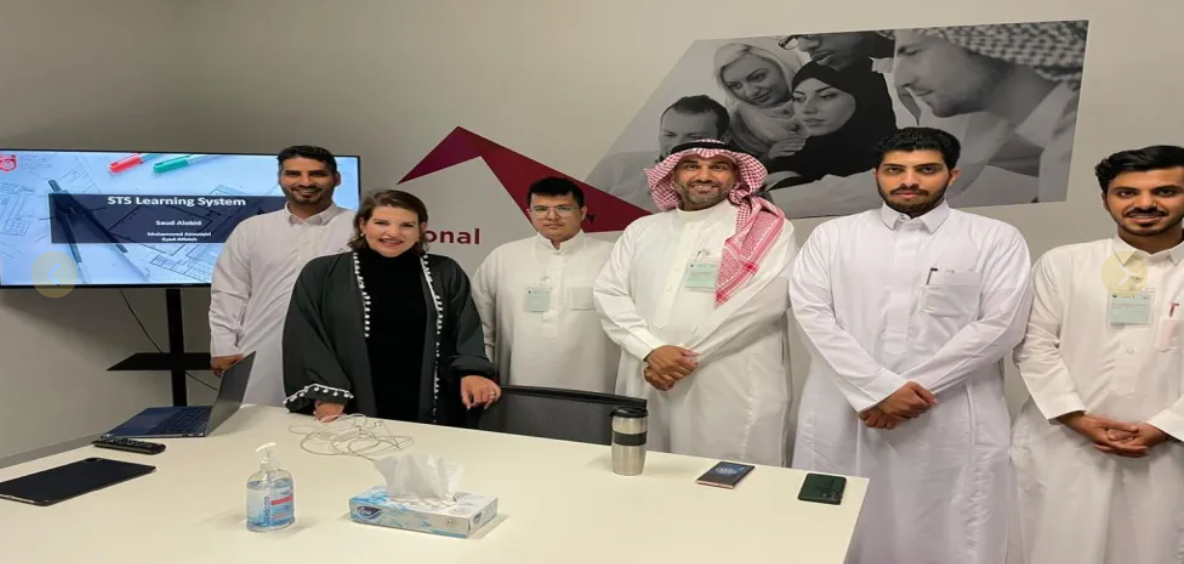
In line with the Kingdom's Vision 2030 to develop the innovation system, and in continuation of its efforts to spread the culture of invention to discover inventors and innovators with the aim of supporting them and developing their pioneering products, the university, represented by the Center for Innovation and Entrepreneurship, participated in the second phase of the University Innovation Challenge for Sustainable Development Program. The university is one of 15 universities across the Kingdom participating in this program, which is organized by the Ministry of Education in partnership with the Prince Mohammed bin Salman College of Business and Entrepreneurship, Babson College of Entrepreneurship Education, and the United Nations Development Program.
The University Innovation Challenge for Sustainable Development Program aims to develop entrepreneurial and innovative capabilities and harness them to find solutions to the challenges facing sustainable development, activate strategic partnerships with local and international entities, and engage innovative students and faculty members in a unique global educational experience that will contribute to the development of emerging university projects.
A team from the College of Engineering represented the university in the second phase of the challenge through the STS Learning System project, in the presence of His Excellency the Head of the Innovation and Entrepreneurship Center, Dr. Abdullah bin Saeed Bajhazer, and under the supervision of His Excellency Dr. Abdulaziz bin Dakhil Al-Mutairi. Students Saud Al-Obaid, Iyad Al-Faleh, and Mohammed Al-Mutairi also participated in the project. The project consists of a learning system that allows students to share knowledge and enable students to help each other on various topics depending on their specialization, saving time and money. It also allows for discussions and conversations among students and the transfer of experiences and knowledge.
The program included several educational experiences covering various topics, presenting successful experiences in innovation and entrepreneurship, and discussing the difficulties and challenges facing leaders and officials in spreading the culture of innovation and entrepreneurship.
Her Excellency the Vice President for Female Student Affairs, Dr. Jawaher bint Abdulrahman Al-Omar, stated that the university continues to emphasize continuous development by developing and preparing innovative students, providing them with the necessary support, striving to create an innovative and sustainable educational environment that stimulates productivity, and leveraging strategic partnerships to serve the community.
Her Excellency also thanked His Excellency the University President for his unlimited support to the Innovation Center and the university's creative and innovative students. She also extended her thanks to His Excellency the Center's President, Dr. Abdullah Bajhazer, for his fruitful efforts, as well as to the participating team, wishing them continued success and guidance.
RIYADH GOVERNOR PATRONIZES THE SIGNING OF MOU BETWEEN KING FAISAL PRIZE AND MU FOR COMMUNITY SERVICE
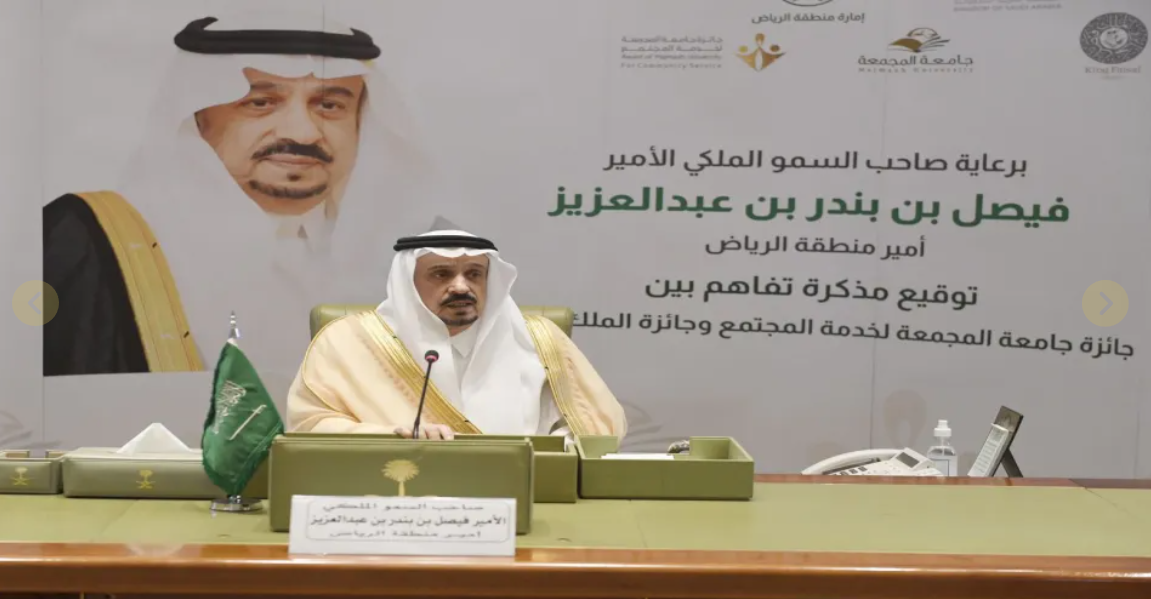
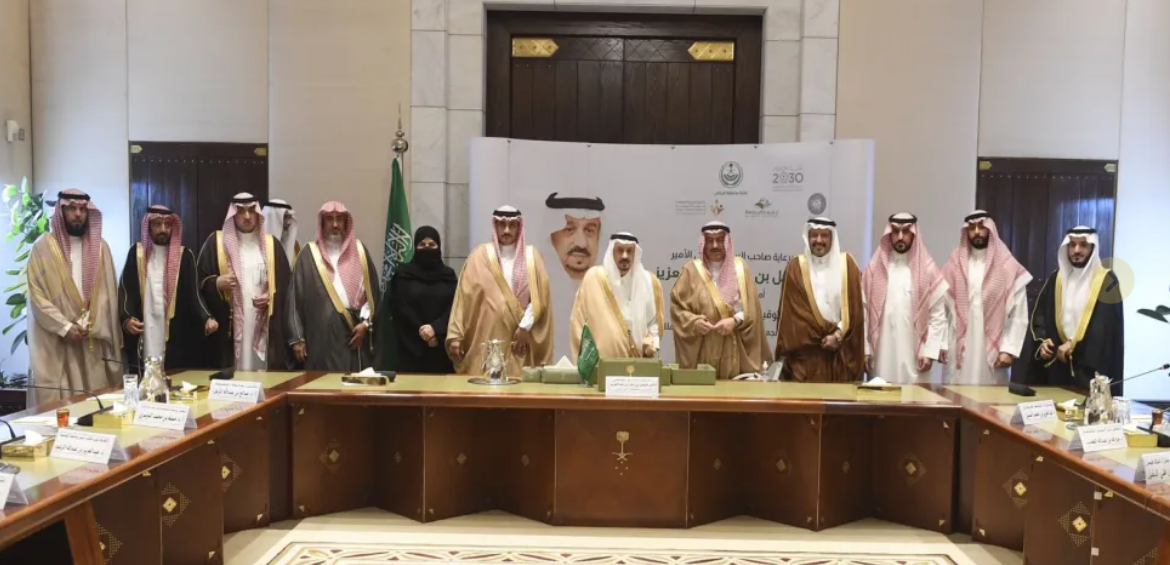
Riyadh Governor Prince Faisal Al Saud, awarded the winners of MU's 4th edition of Community Service Award. MU rector, Prof. Saleh Al-Mizil, who was welcomed by Prince Faisal along with the award sponsors and winners, highlighted the achievements and qualitative services provided by MU to individuals and local community institutions in the areas located within the university's geographical area.
A Memorandum of Understanding (MoU) was then signed between MU's Community Service Award and King Faisal Prize. Dr. Saleh Al-Mizil, MU rector, and Dr. Abdulaziz Al-Sabal, signed the MoU.
Prof. Musallam Al-Dosari, highlighted the updates of the award and the aspirations of its board, led by MU rector.
The Executive Director of the award, Dr. Adel Al-Turki, pointed out the goals and aspirations of MU's partnership with an international award such as King Faisal Prize.
Dr. Al-Turki also reviewed the award's categories and the winners in the 4th edition who are 22 in four categories.
Dr. Al-Turki said that Prince Faisal's awarding of winners over the past four years has had a significant impact in increasing participation and the growth of community initiatives provided to individuals and institutions. He presented some indicators showing the initiative growth since the launch of the award as well as the community services provided by the university.
A commemorative shield of the award was presented to Riyadh Governor who handed the prizes to winners in all categories.
Riyadh Governor also sponsored the signing of the partnership agreement between King Faisal Prize and MU for Community Service.
-
Knowledge Sharing with NGOs and Industry:
Majmaah University collaborates with civil society organizations and businesses to tackle SDGs through research and volunteerism. For example, the university’s medical and engineering faculty have partnered with healthcare organizations and technology firms on innovation hackathons addressing health and industrial sustainability challenges mu.edu.sa mu.edu.sa. The university has also engaged local NGOs in joint workshops on poverty alleviation and environmental conservation (SDGs 1, 13, 15), often inviting practitioners to campus events open to the public. By working with private-sector partners – such as the banks and enterprises that co-sponsored its SDG 2030 conference unitar.org – Majmaah ensures that real-world perspectives inform academic research, and that student innovations have pathways to implementation in industry. These cross-sector collaborations enrich the university’s curricula and research projects with practical insights while offering external partners the university’s scientific resources and youthful talent.
With a device for drying and fixing laboratory medical slides, a research team of university students wins first place in the Health Innovation Hackathon.
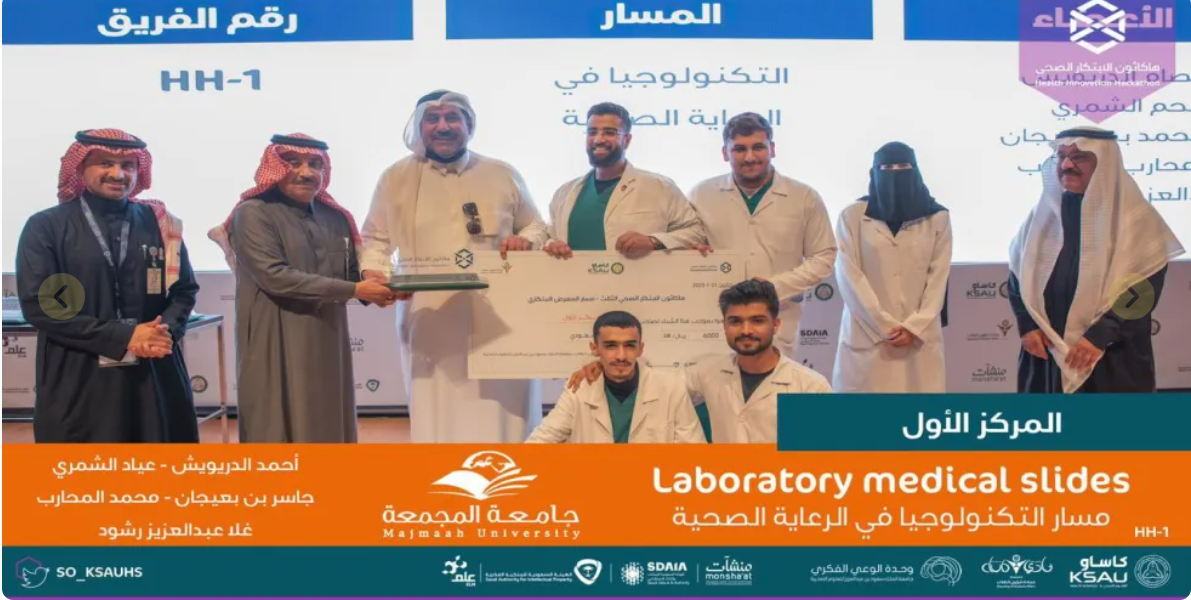
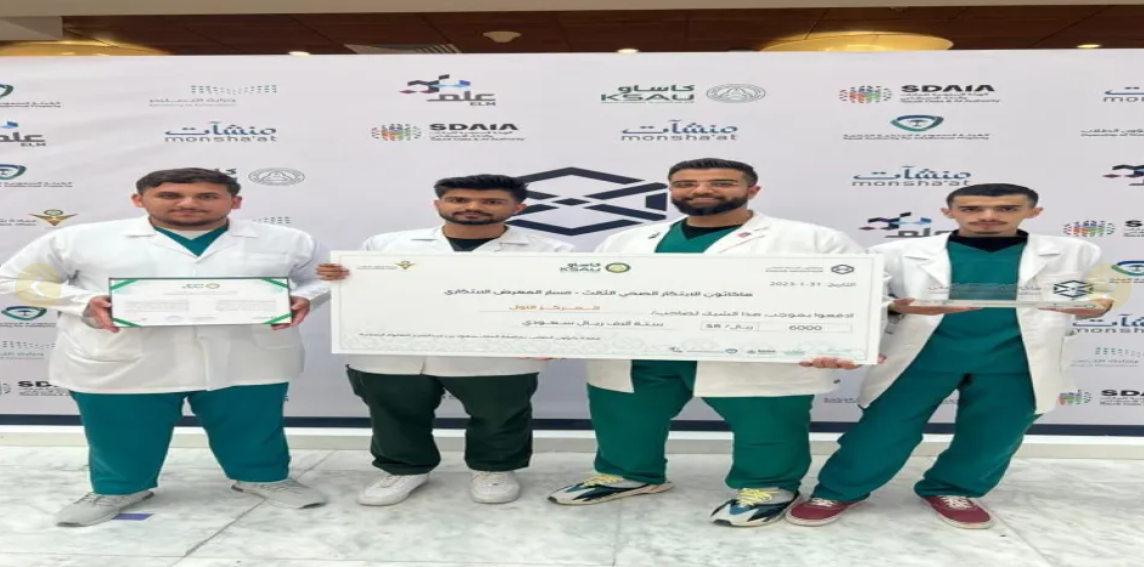
In a new achievement for the university and its staff, the university won first place in the Health Innovation Hackathon competition held at King Saud bin Abdulaziz Al Saud University for Health Sciences, National Guard, Riyadh. The competition was attended by more than 13 Saudi universities, with more than 60 entries. The university participated with a device for drying and fixing medical tissues, which operates on an ideal heating system and mechanism for laboratory medical slides fixed on paraffin wax tissues, which requires precise, uniform heat for the purpose of fixing tissues during laboratory experiments on the slides, including the application of dyes after the fixation process.
The team participating in the competition included students Ahmed Al-Darwish, Ayyad Al-Shammari, Jasser Bin Buaijan, and Mohammed Al-Muharab, all university students, and Ghala Bint Abdul Aziz Bin Rashid, a female student at King Saud University, under the supervision of Professor Dr. Raed Bin Salim Al-Baradei.
The research team conducted preliminary experiments to test the device and its efficiency in fixing slides. The results were confirmed by conducting experiments on tissue dyes to determine the efficiency of the drying and fixing process. In practice, the device can adjust the digital temperature of the slide heaters equipped with a digital display from room temperature to 75°C (167°F). The device's internal surface is made of 25 x 9-inch anodized aluminum to transfer heat consistently and dry the slides homogeneously. This unit also contains an additional adjustment button that allows switching between viewing the set temperature and the actual temperatures at the same time. The device is equipped with a steel fan that distributes heat evenly across all the fixed slides. It is also equipped with a thermostat to prevent overheating, which could damage genes and antigens in the tissues fixed on the tissue slides. The device is also supported by a timer to ensure that the experiment time does not exceed the required rate. The device is designed with a lightweight frame made of fiber combined with aluminum to ensure balanced thermal heating and rapid heat transfer at a rate consistent with the type of tissue to be fixed. It has a 200-watt heating loop control, can withstand temperatures up to 70 degrees, has a temperature sensor, and has a filter to remove excess water after drying the slices.
The device was manufactured at an economical cost, enabling it to compete in the industrial markets specializing in medical devices. Its cost does not exceed 340 riyals, while other devices used to perform the current drying and stabilization process cost approximately 6,000 riyals.
The research team, which obtained a document granting a patent for the industrial model from the Saudi Authority for Intellectual Property, included Saudi cadres from the sons and daughters of the nation, including Professor Saud Abdulaziz Al-Ateeq from King Khalid Hospital, Professor Issa Abdullah Abdul Mohsen Al-Issa, and from the university students, student Ahmed Essam Ahmed Al-Driwish, Ayyad Muqhim Al-Shammari, Fahd Al-Anzi, student Samar Mohammed Al-Omar, Obaid Suwaid Al-Sahli, Mohammed Muharab Al-Muharab, specialist Professor Nada Mohammed Al-Thamiri, Jasser Mohammed Al-Buaijan, and Ghala Abdulaziz bin Rashid from students of King Saud Medical University, affiliated with the National Guard, Abdullah Abdul Mohsen Al-Shaya, and specialist Fahd Nasser Mohammed Al-Suwaid from the Ministry of Health, in coordination and supervision of the Dean of the College of Applied Medical Sciences, Dr. Musaed bin Ali Al-Zahrani, and in coordination and follow-up of Professor Dr. Raed bin Salim Al-Baradei from the Department of Medical Laboratories at the College of Applied Medical Sciences.
This achievement is part of a series of achievements and works of Sheikh Abdullah bin Abdul Mohsen Al-Tuwaijri Stroke Chair at the university. The innovation team expressed its thanks and appreciation to the University President, Prof. Dr. Saleh bin Abdullah Al-Mazel, for his follow-up and support, which had a significant impact on the achievements made, and to the University Vice President, Prof. Dr. Muslim Al-Dosari, the University Vice President for Postgraduate Studies and Scientific Research, Prof. Dr. Ahmed Al-Rumaih, the Dean of the College of Applied Medical Sciences, Dr. Musaed Al-Zahrani, the Dean of Student Affairs, Dr. Saleh Al-Rashidi, and the Head of the Medical Laboratories Department, Dr. Sahar Al-Dosari, for their support of the path of inventions and innovations at the university and for male and female students.
UNITAR and CIFAL Saudi Arabia Lead Conference on Sustainable Development Goals
Partnerships with External Universities and Research Centers
Recognizing that sustainable development requires global cooperation, Majmaah University has built formal partnerships with other universities and research institutions – frequently manifesting in joint conferences, academic workshops, and policy forums:
-
LEAP-FAST Global Alliance:
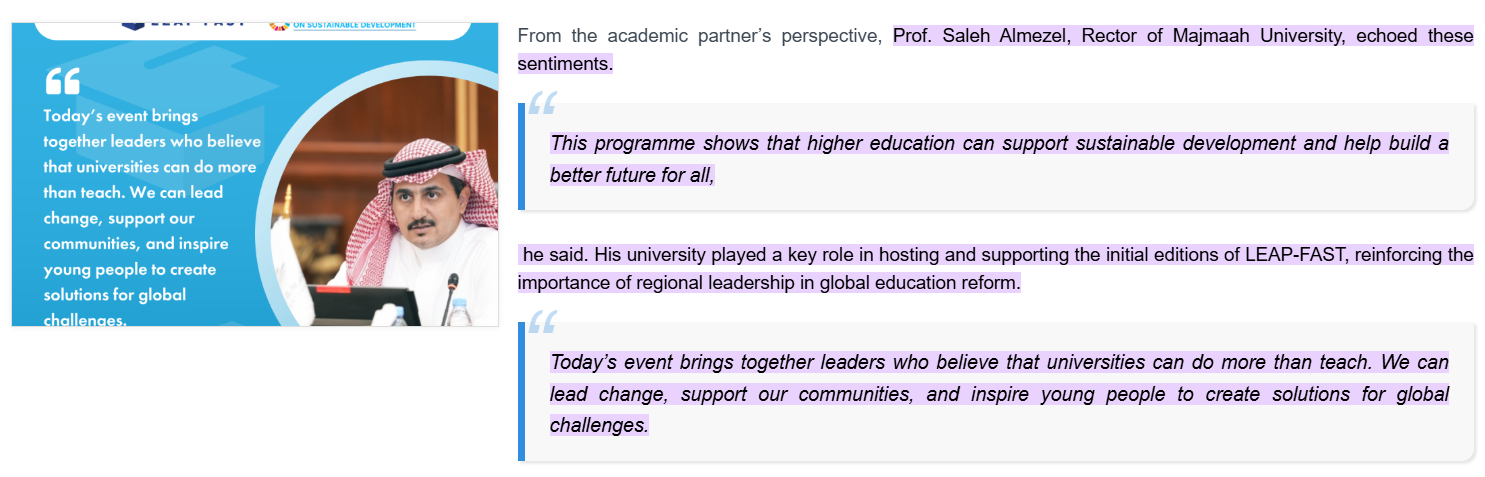
Majmaah University is a founding academic partner of the Leaders in Higher Education Alliance Programme – For Accelerating Sustainability Transformations (LEAP-FAST), a UNESCO-UNITAR initiative uniting universities worldwide to drive the SDGs in higher education unitar.org unitar.org. As the main academic host for LEAP-FAST’s initial editions, Majmaah University is “leading the way” – with the first two cohorts of this global certificate program being hosted and supported on its campus in Saudi Arabia unitar.org. The university’s Vice-Rector for Graduate Studies, Prof. Mohammed Alshehri, has emphasized via this partnership that “higher education institutions play a key role in global sustainability efforts”, noting that LEAP-FAST “puts sustainability at the heart of our teaching, research, and community engagement”unitar.org. This alliance has fostered joint workshops and co-creation labs involving faculty from Majmaah and peers from universities in Africa, Europe, Asia, and the Americas unitar.org unitar.org. By collaborating on curriculum transformation and leadership training for sustainability, Majmaah and its partners (e.g. University of Mauritius, University of the Philippines, University College Dublin, York University and others) are collectively developing best practices and influencing policy discourse on education for sustainable development unitar.org unitar.org. The partnership’s activities – from joint academic workshops to multi-university policy statements – exemplify how Majmaah’s faculties engage internationally to advance SDG 4 (quality education) and SDG 17 (global partnerships).
LEAP-FAST side event at 2025 HLPF “Innovating across higher education space for more inclusive and sustainable future for all”
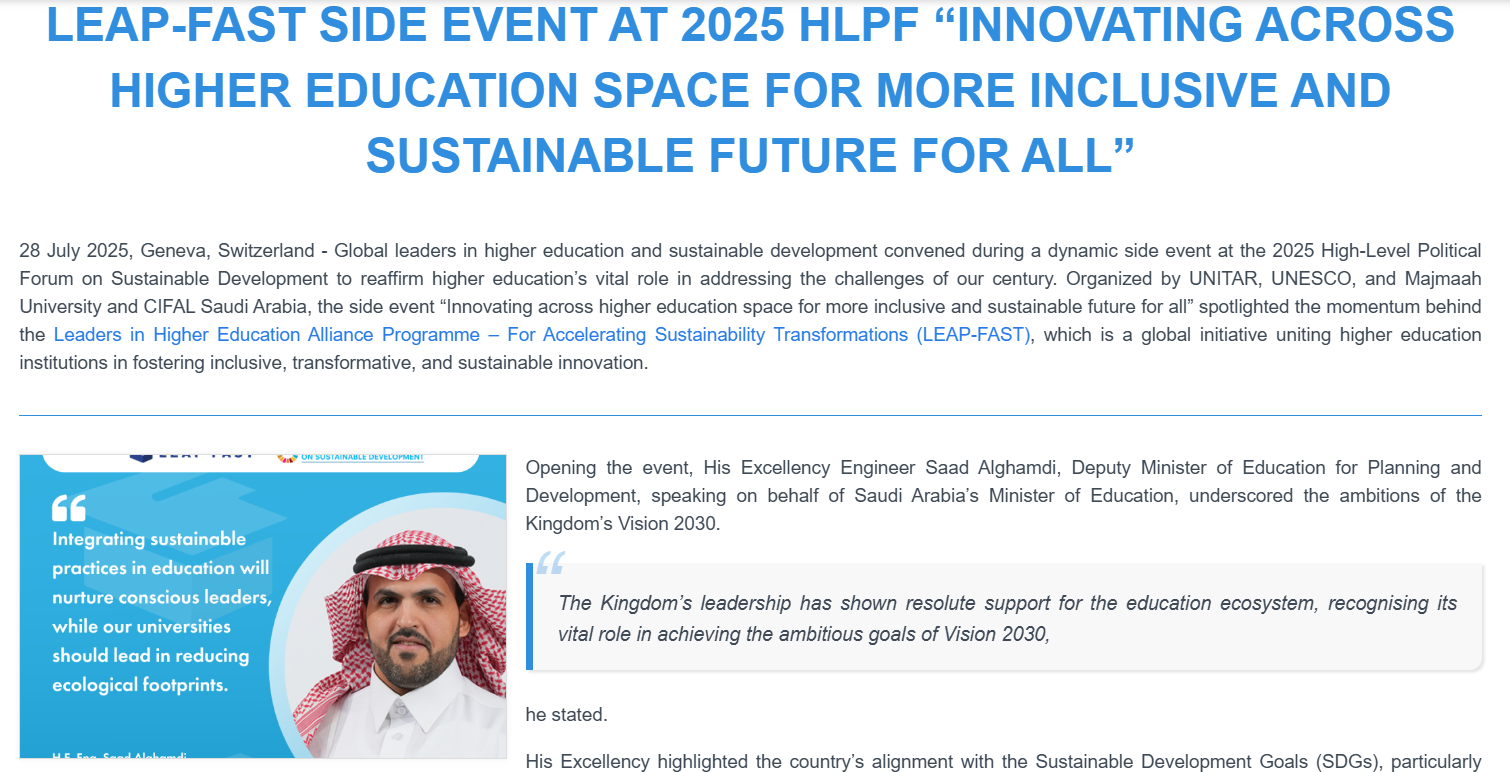
28 July 2025, Geneva, Switzerland - Global leaders in higher education and sustainable development convened during a dynamic side event at the 2025 High-Level Political Forum on Sustainable Development to reaffirm higher education’s vital role in addressing the challenges of our century. Organized by UNITAR, UNESCO, and Majmaah University and CIFAL Saudi Arabia, the side event “Innovating across higher education space for more inclusive and sustainable future for all” spotlighted the momentum behind the Leaders in Higher Education Alliance Programme – For Accelerating Sustainability Transformations (LEAP-FAST), which is a global initiative uniting higher education institutions in fostering inclusive, transformative, and sustainable innovation.
Summit of the Future Side Event: LEAP-FAST
"LEAP-FAST: Accelerating Sustainable Transformations through Higher Education Networks"
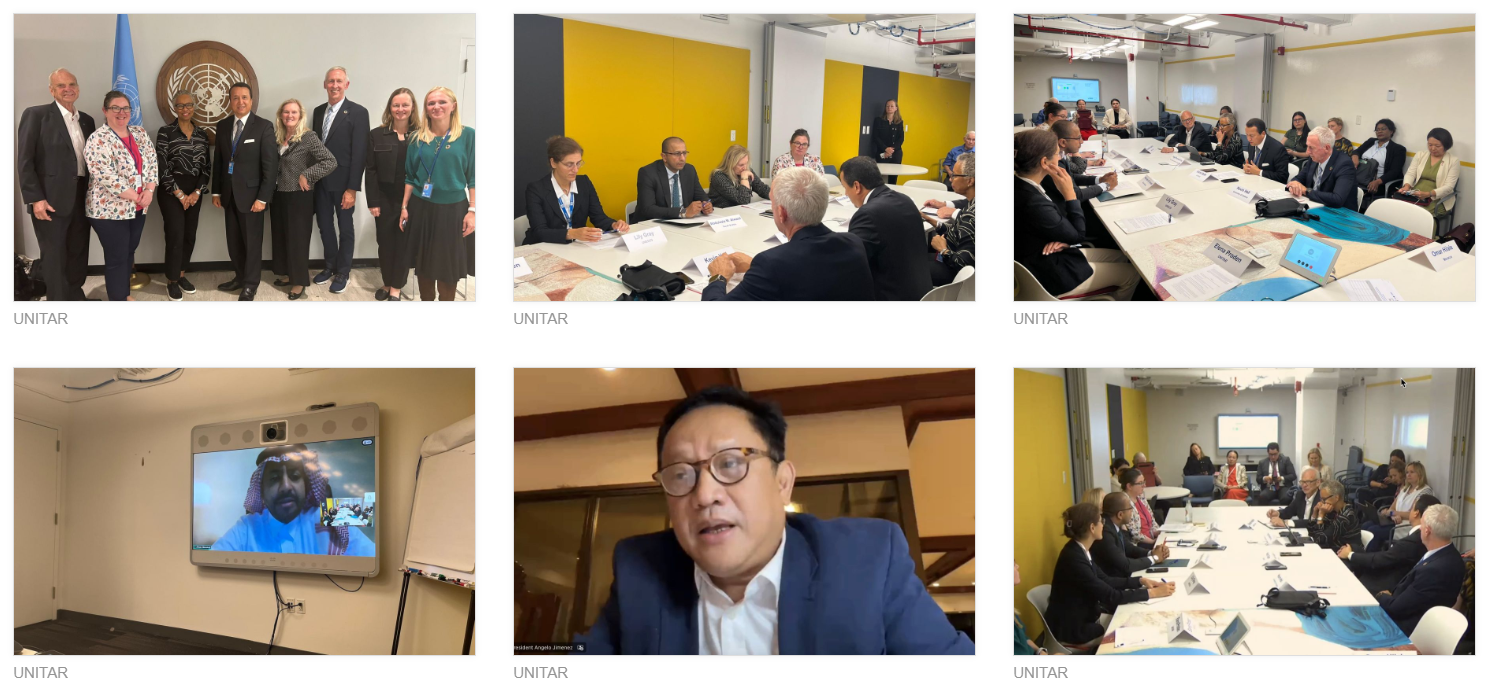
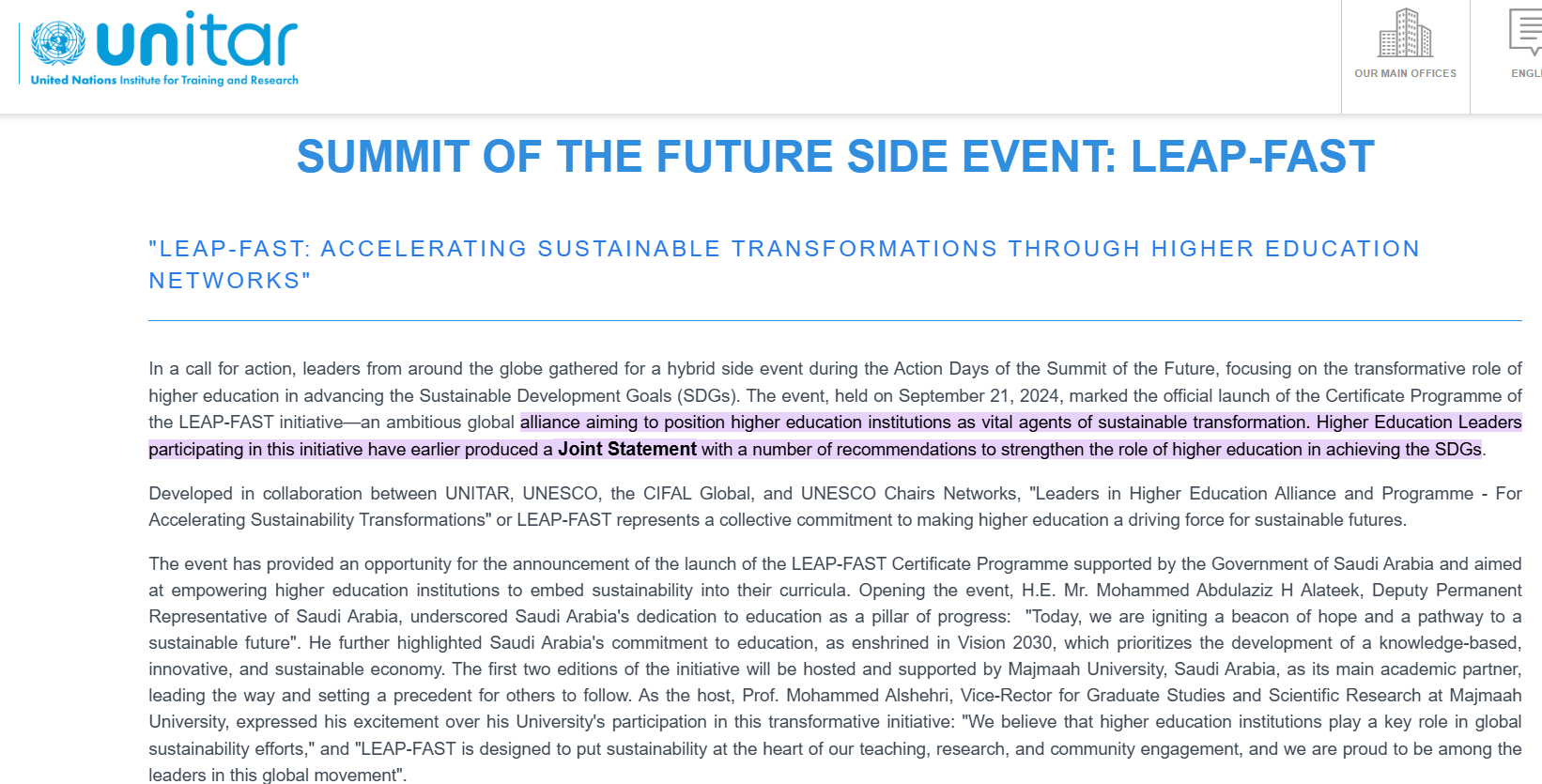
In a call for action, leaders from around the globe gathered for a hybrid side event during the Action Days of the Summit of the Future, focusing on the transformative role of higher education in advancing the Sustainable Development Goals (SDGs). The event, held on September 21, 2024, marked the official launch of the Certificate Programme of the LEAP-FAST initiative—an ambitious global alliance aiming to position higher education institutions as vital agents of sustainable transformation. Higher Education Leaders participating in this initiative have earlier produced a Joint Statement with a number of recommendations to strengthen the role of higher education in achieving the SDGs.
Developed in collaboration between UNITAR, UNESCO, the CIFAL Global, and UNESCO Chairs Networks, "Leaders in Higher Education Alliance and Programme - For Accelerating Sustainability Transformations" or LEAP-FAST represents a collective commitment to making higher education a driving force for sustainable futures.
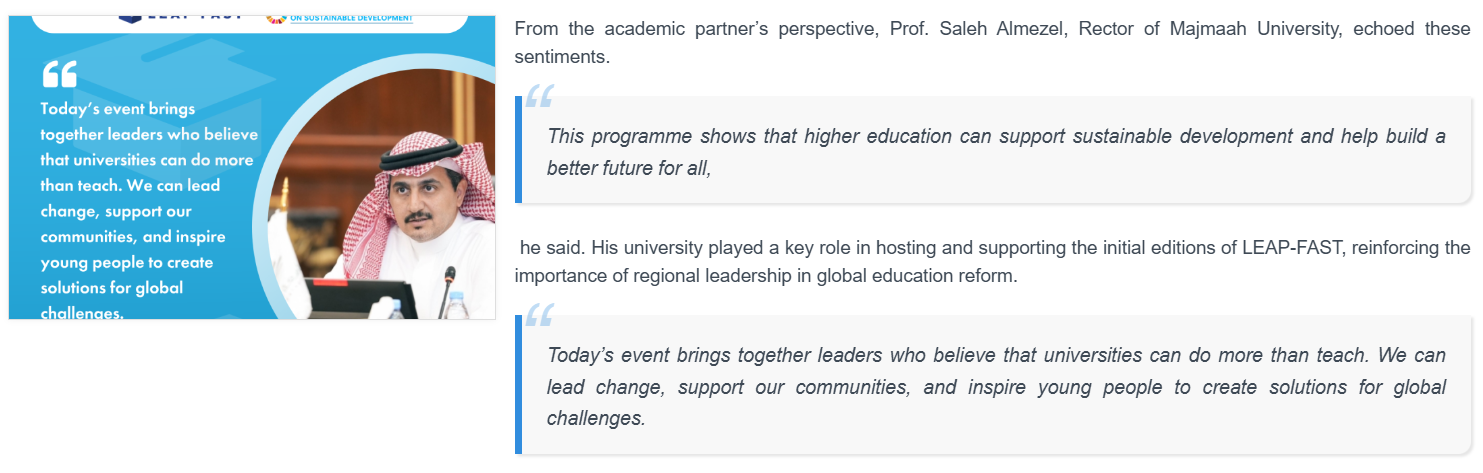
The event has provided an opportunity for the announcement of the launch of the LEAP-FAST Certificate Programme supported by the Government of Saudi Arabia and aimed at empowering higher education institutions to embed sustainability into their curricula. Opening the event, H.E. Mr. Mohammed Abdulaziz H Alateek, Deputy Permanent Representative of Saudi Arabia, underscored Saudi Arabia's dedication to education as a pillar of progress: "Today, we are igniting a beacon of hope and a pathway to a sustainable future". He further highlighted Saudi Arabia's commitment to education, as enshrined in Vision 2030, which prioritizes the development of a knowledge-based, innovative, and sustainable economy. The first two editions of the initiative will be hosted and supported by Majmaah University, Saudi Arabia, as its main academic partner, leading the way and setting a precedent for others to follow. As the host, Prof. Mohammed Alshehri, Vice-Rector for Graduate Studies and Scientific Research at Majmaah University, expressed his excitement over his University's participation in this transformative initiative: "We believe that higher education institutions play a key role in global sustainability efforts," and "LEAP-FAST is designed to put sustainability at the heart of our teaching, research, and community engagement, and we are proud to be among the leaders in this global movement".
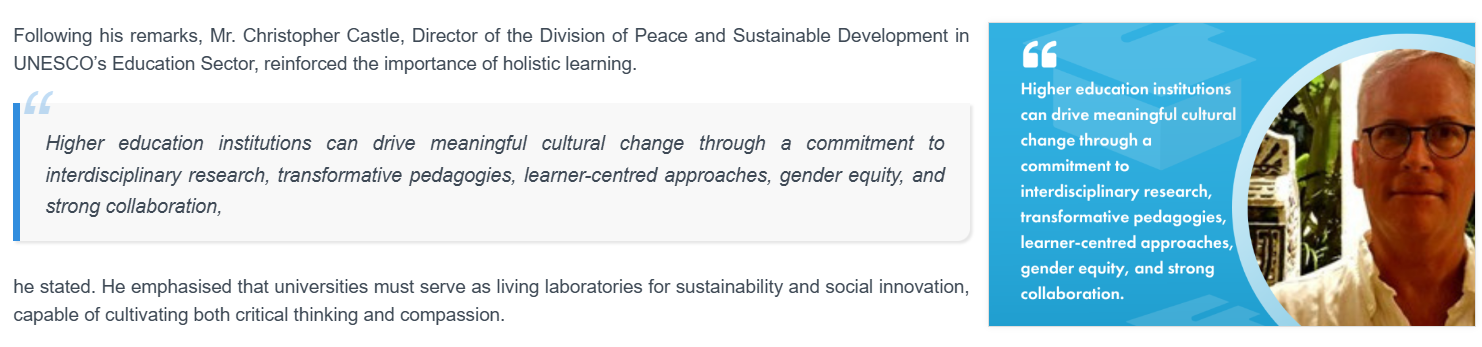
With her agency as the key partner, Ms. Lily Gray, Senior Liaison Officer, UNESCO, urged universities to adopt "whole-of-institution" approaches to foster inclusion, sustainability, and innovation across all academic disciplines. "We must work together to provide inclusive and transformative learning experiences," Ms. Gray said, pointing to the need for interdisciplinary research and learning, gender equity, lifelong education, and collaboration across sectors and countries as key components for a sustainable future. In his turn Mr. Mejia, Director of the Division for People at UNITAR, chairing the event noted that "Universities must be at the forefront of societal transformation, leveraging their expertise to accelerate progress towards the SDGs," emphasizing the urgency to better harness the potential of higher education institutions as key accelerators of change.
Dr. Aiman Albarakati, Director of CIFAL Saudi Arabia, and Dr. Elena Proden, the initiative lead at UNITAR, jointly presented the LEAP-FAST initiative and the accompanying Certificate Programme, highlighting the significant role it will play in transforming higher education. Dr. Albarakati emphasized that the LEAP-FAST Certificate Programme is designed to equip educators with the tools to embed sustainability competencies across curricula, learning content, and assessment methods. Dr. Proden referred to the Joint Statement from participating University leaders initially presented at the 2024 High-Level Political Forum on Sustainable Development (HLPF) side event, as “ a collective call to action that underscores the need for higher education institutions to reimagine leadership for sustainable development" and “a blueprint for transforming higher education institutions into powerful agents of sustainable development”. The LEAP-FAST initiative is designed as a global movement aiming to expand the reach of the initiative to more Higher Education Institutions across different regions and countries.
At the origins of the initiative and its active Advisor Group member, Professor Charles Hopkins, UNESCO Chair at York University, echoed the need of transformation, emphasizing that universities must shift their approach to make a real impact on sustainability and that a shift from “teaching sustainability” to “teaching for sustainability” is critical. "The challenge for us is to understand that the traditional approaches to higher education—teaching in disciplinary silos—are no longer sufficient," said Hopkins. "We need to reorient our entire education system towards sustainability, where students learn through practical engagement and transdisciplinary collaboration... Higher education institutions must work with communities, governments, and industries to co-create knowledge that is both meaningful and actionable. "If we don’t transform by design, we will be transformed by disaster. This is our opportunity to rethink and engage with those potential leaders", he warned the audience.
One of the challenges LEAP-FAST is trying to address is the disparity between institutions in the Global North and South, with Universities from developing countries insufficiently included in international research and education partnerships. The LEAP-FAST initiative brings together a diverse group of higher education institutions from around the globe and countries in different situations with most active members from Saudi Arabia, Australia, Canada, Kenya, Philippines, Ireland, Costa Rica, Mauritius, Thailand, Turkey, and more recently Senegal and the Caribbean region with the University of West Indies. H.E. Ms. Inga Rhonda King, Permanent Representative of Saint Vincent and the Grenadines, highlighted the importance of bridging the North-South divide to ensure equal access to quality education and knowledge-sharing opportunities: "We need to use initiatives like LEAP-FAST to foster partnerships between developed and developing countries, empowering universities everywhere to contribute to sustainable development." Ambassador King echoed the UNESCO chair by pointing to the importance of rethinking how to teach for sustainability: “We must interrogate what a good life is today and bring our youth into that conversation."
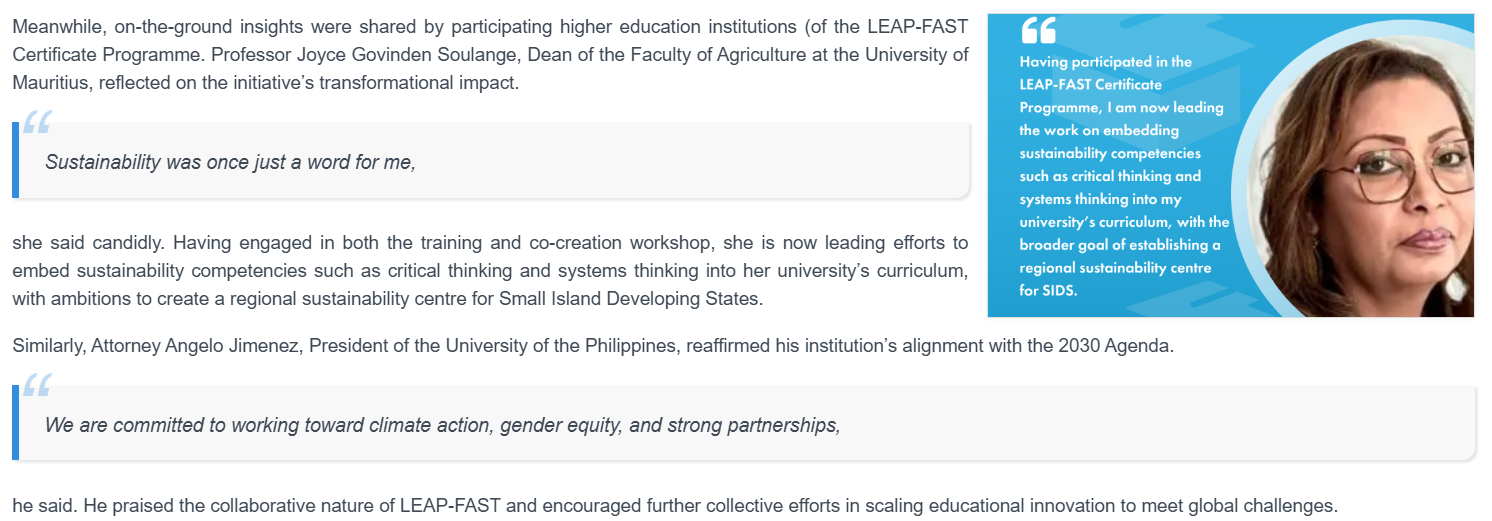
President Atty. Jimenez of the University of the Philippines has challenged the academic community to make research more accessible: "How many of you are willing to offer open access to your research? This is critical for us in the developing world." The University of the Philippines works with the local communities, and they've seen thousands of lives saved since they came out with the results of their research on flooding and the respective maps. President Atty. Angelo Jimenez also emphasized the importance of empathy in university-community partnerships, particularly for marginalized communities. He called on universities to engage directly with communities to implement research-driven solutions that address local needs. "Universities today have to emphasize community action, based on empathy and respect for local cultures, priorities, and knowledge".
Several speakers outlined practical measures to transform higher education in support of the SDGs in the hope that the LEAP-FAST initiative can contribute to their future realization. Dr. Kevin Hall, President of the University of Victoria, Canada, called for integrating sustainability into all aspects of university life, including curricula, research, and student engagement, and reimagining higher education by moving from traditional disciplinary silos to a transdisciplinary approach that incorporates practical, mission-driven projects: "We need to transition from University 1.0 to University 2.0, modernizing governance, funding models, and our entire approach to education. We can no longer afford to operate with the same structures we used centuries ago." To maintain relevance, Universities also need, Dr. Hall noted, to better embed themselves in the continuum of education, from K-12 to lifelong learning, and foster genuine partnerships.
Dr. Rhonda L. Lenton, President of York University, addressed the challenges facing higher education in terms of equitable access, outdated structures, and limited funding. "We need to realize that what we are facing are transformational challenges," she said. "We cannot succeed if we do not look at partnerships across sectors—between private industry, government, and higher education. It is these relationships that will allow us to truly transform." Dr. Lenton emphasized the importance of changing how universities engage with students, promoting lifelong learning, and leveraging the potential of young people to drive sustainable change.
In her role as a government representative, Ms. Fiona McManus, Assistant Principal at the Department of the Environment, Climate, and Communications in Ireland, also highlighted the importance of collaboration between academia and government providing examples of Ireland's SDG stakeholder forum and the SDG Champions programme. "The recognition of higher education institutions as living laboratories for the future of society is crucial," Ms. McManus said. "It is clear that education is fundamental to the future of people and the planet, and it is through partnerships and community engagement that we will achieve the SDGs."
It is hoped that the LEAP-FAST initiative will support the dialogue with policymakers and other communities, as well as required transformations of higher education to position it as a driving force for sustainable development. By leveraging the unique position of higher education institutions, the LEAP-FAST initiative will ultimately aim to equip future generations with the knowledge, skills, and mindset needed to tackle the world's most pressing challenges.
-
International Conferences and Research Networks:
Majmaah University’s colleges frequently collaborate with external universities to host scholarly forums on sustainability. The “Third International Sustainability Forum: Education and Awareness to Achieve Sustainable Development” (listed among CIFAL programs) is one such example of an academic conference co-organized with international input m.mu.edu.sa. Majmaah faculty have also joined forces with research centers abroad for workshops on renewable energy and water management (SDGs 7 and 6), sharing research findings and policy recommendations. These formal academic linkages are often underpinned by Memoranda of Understanding – for instance, Majmaah’s College of Engineering has MoUs facilitating joint research symposiums on green technology with partner universities in the GCC region. By convening policy development forums – sometimes under the auspices of UNESCO Chairs or the Islamic World Educational, Scientific and Cultural Organization (ICESCO) – Majmaah University’s experts contribute to shaping regional strategies on issues like climate action (SDG 13) and sustainable cities (SDG 11). Every such partnership amplifies the university’s impact, allowing it to both share its on-ground experiences and import global expertise for local benefit unitar.org unitar.org.
CIFAL Saudi Center sponsors a Program on Sustainable Development Goals 2030
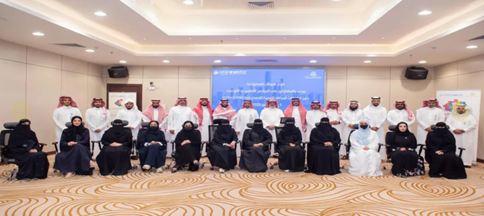
Under the generous patronage of Prof. Musallam Al-Dosari, Vice Rector of Majmaah University for Development and Investment, the Saudi Center for Sustainability and Development (CIFAL) in Riyadh concluded its advanced training program: “Expert in Applying the Sustainable Development Goals (SDGs 2030).” The program brought together a distinguished group of leaders and academics from various universities, government entities, and development sectors.
This new edition of the program was designed to empower participants with a deep understanding of SDG concepts and practical applications, equipping them with the skills to design and implement impactful development initiatives that support Saudi Arabia’s Vision 2030 and enhance institutional performance in the development field.
Key themes included:
· Fundamental concepts of development, sustainability, and the SDGs 2030.
· The meaning and impact of SDGs and their alignment with Vision 2030.
· Saudi Arabia’s achievements in advancing the SDGs.
· The role and importance of sustainability reports and methodologies for impact measurement.
· The program also aimed to qualify candidates to join the global initiative LEAP-FAST (Leaders of Higher Education for Accelerating Transformations in Sustainability) – Second Edition, strengthening their competitiveness both locally and internationally.
UNITAR and CIFAL Saudi Arabia Lead Conference on Sustainable Development Goals
-
Membership in Global Networks:
Beyond one-to-one partnerships, Majmaah University is plugged into wider networks committed to sustainability. Its role in the CIFAL Global Network links it with training centers on every continent, enabling exchange of knowledge resources and joint events with institutions ranging from CIFAL Honolulu (USA) to CIFAL Istanbul. Majmaah is also an active member of initiatives like the Higher Education Sustainability Initiative (HESI) and has representation in the SDSN (Sustainable Development Solutions Network) Saudi Chapter, collaborating with other universities on SDG data collection and community projects. These networks facilitate ongoing academic dialogue – for example, Majmaah staff contributed to a joint statement by higher education leaders at the 2024 Summit of the Future, outlining recommendations to strengthen universities’ role in achieving the SDGsunitar.orgunitar.org. Such collective efforts ensure that Majmaah University’s experience (as a fast-growing Saudi public university) informs global policy, and conversely, that it stays updated on international best practices to implement at homeunitar.orgunitar.org.
Advancing SDG Targets through Dialogue and Collaboration
Crucially, Majmaah University’s cross-sector dialogues and partnerships are not just events unto themselves – they drive tangible progress on SDG targets within the institution and across society:
-
Integrating Sustainability in Education and Operations:
Insights from these dialogues have translated into concrete actions on campus. The collaborative programs under LEAP-FAST, for instance, have guided Majmaah University in embedding the SDGs “into the DNA” of its curricula and research unitar.org. Faculty champions trained through global workshops are introducing interdisciplinary courses on sustainability and developing new pedagogies that emphasize critical and systems thinking, as reported by participants from partner universities unitar.org unitar.org. The outcome is a generation of graduates more versed in sustainable development challenges and solutions – directly supporting SDG 4 (Quality Education) and SDG 13 (Climate Action) through education reform. Majmaah has also established internal policies (informed by global best practices shared at conferences) – for example, adopting sustainability in its campus operations and reporting. The importance of sustainability reporting and impact measurement, stressed during the SDG training programs m.mu.edu.sa m.mu.edu.sa, is reflected in Majmaah’s annual reports that track progress on energy saving, waste reduction, and inclusion (advancing targets under SDGs 7, 12, 5, etc.).
-
Shaping Policy and Community Initiatives:
Dialogue outputs are feeding into higher-level strategies and local community actions. The 2024 HESI forum’s recommendations – in which Majmaah was a key voice – are contributing to draft policies and action plans for sustainability in higher education, at both national and international levels mu.edu.sa. Within Saudi Arabia, Majmaah University’s close work with the Ministry of Education on the Innovation Challenge has helped activate strategic partnerships to support student start-ups aimed at SDG challenges mu.edu.sa. Some of these student projects (e.g. a peer-learning platform developed by Majmaah’s engineering team) directly address education quality and accessibility, thereby pushing forward SDG 4. In the community, the MoU with the King Faisal Prize for community service is yielding an uptick in local development initiatives – over four years, the partnership has catalyzed dozens of community projects and significantly increased volunteer participation mu.edu.sa mu.edu.sa. By honoring and incentivizing such projects, the university-community partnership contributes to SDGs like Good Health & Well-Being, Quality Education, and Reduced Inequalities at the grassroots level.
RIYADH GOVERNOR PATRONIZES THE SIGNING OF MOU BETWEEN KING FAISAL PRIZE AND MU FOR COMMUNITY SERVICE
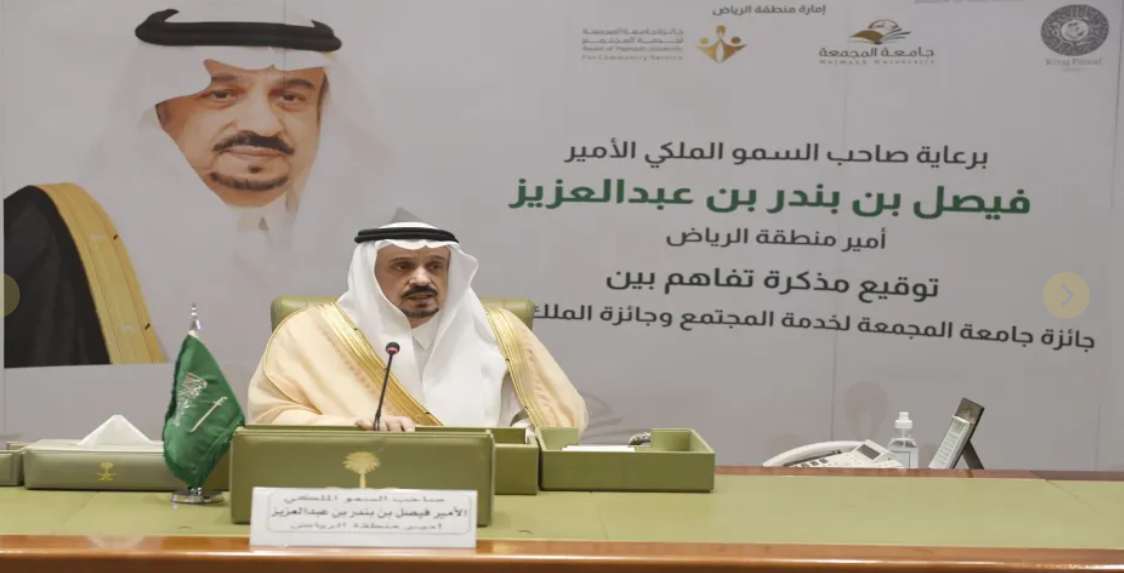
Riyadh Governor Prince Faisal Al Saud, awarded the winners of MU's 4th edition of Community Service Award. MU rector, Prof. Saleh Al-Mizil, who was welcomed by Prince Faisal along with the award sponsors and winners, highlighted the achievements and qualitative services provided by MU to individuals and local community institutions in the areas located within the university's geographical area.
A Memorandum of Understanding (MoU) was then signed between MU's Community Service Award and King Faisal Prize. Dr. Saleh Al-Mizil, MU rector, and Dr. Abdulaziz Al-Sabal, signed the MoU.
Prof. Musallam Al-Dosari, highlighted the updates of the award and the aspirations of its board, led by MU rector.
The Executive Director of the award, Dr. Adel Al-Turki, pointed out the goals and aspirations of MU's partnership with an international award such as King Faisal Prize.
Dr. Al-Turki also reviewed the award's categories and the winners in the 4th edition who are 22 in four categories.
Dr. Al-Turki said that Prince Faisal's awarding of winners over the past four years has had a significant impact in increasing participation and the growth of community initiatives provided to individuals and institutions. He presented some indicators showing the initiative growth since the launch of the award as well as the community services provided by the university.
A commemorative shield of the award was presented to Riyadh Governor who handed the prizes to winners in all categories.
Riyadh Governor also sponsored the signing of the partnership agreement between King Faisal Prize and MU for Community Service.
-
Enhanced Cross-Sector Partnerships:
Each dialogue that Majmaah University initiates or joins tends to spawn new partnerships or strengthen existing ones, creating a ripple effect for SDG progress (supporting SDG 17 directly). The 2024 SDG conference, for example, concluded with a resolve among participants to pursue “future collaborations” and a “collective responsibility in realizing the SDGs” unitar.org. Following the event, Majmaah University reported multiple follow-up actions: working groups with other universities on sustainability curricula, exploratory meetings between the Ministry and universities on SDG policy alignment, and new connections with the private sector (e.g. NEOM’s sustainability team engaging Majmaah researchers on joint projects). On the global stage, Majmaah’s contributions to the Summit of the Future and HLPF dialogues have been acknowledged as part of a “blueprint for transforming higher education institutions into powerful agents of sustainable development” unitar.org unitar.org. By committing to these partnerships, Majmaah is helping ensure that universities are recognized in policymaking circles as key players in achieving the SDGs – a shift that can unlock further resources and collaborative opportunities for all of higher education.
In summary, Majmaah University’s strategy of proactive engagement and partnership has created a vibrant ecosystem for SDG dialogue, bridging sectors and borders. From co-leading international conferences to grassroots community programs, the university consistently leverages its convening power to unite stakeholders around shared sustainability goals. These dialogues not only enhance Majmaah’s own sustainability practices and educational quality, but also contribute to broader societal impact – be it through informing policy, empowering youth and women, or accelerating innovative solutions for sustainable development. By embedding the outcomes of these conversations into tangible initiatives, Majmaah University exemplifies how a higher education institution can advance the SDGs both within and beyond its campus mu.edu.sa mu.edu.sa.

Share your opinion and contribute to improvement.
0 of 160 visitors liked the page content (0% Visitor Satisfaction Index)